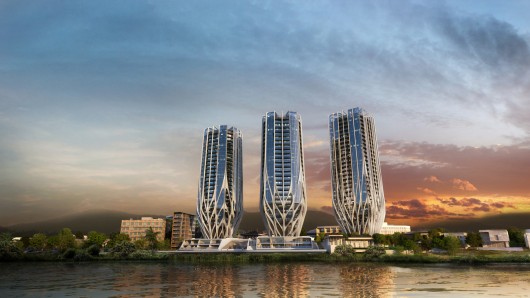
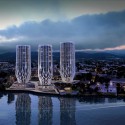
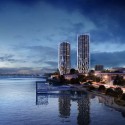
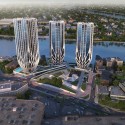
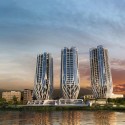
Courtesy of Zaha Hadid Architects Zaha Hadid Architects have unveiled their latest design, an urban riverfront development in Brisbane. The project consists of three 22 and 25-story sculptural residential
towers containing 486 apartments and eight riverfront villas, along
with car parking spaces and 7,300 square meters of landscaped public
parklands. According to property developer Sunland Group’s Managing
Director, Sahba Abedian, Grace on Coronation is slated to reinvigorate a historic site.
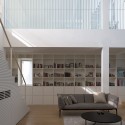
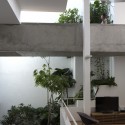
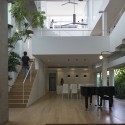
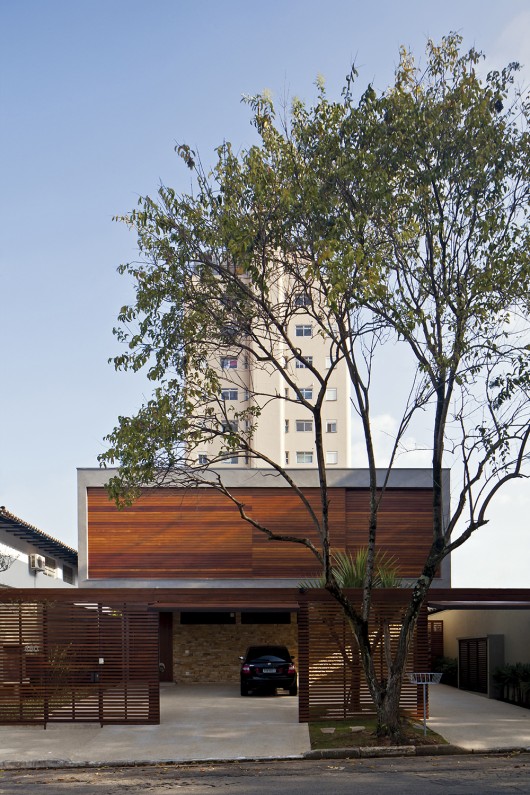
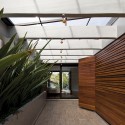
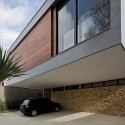
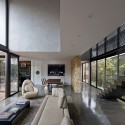
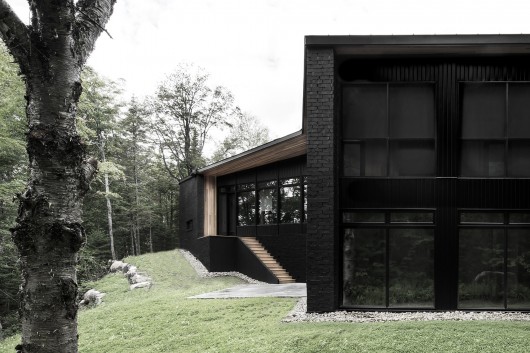
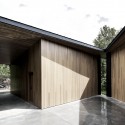
Architects: Drucker Arquitetura
Location: São Paulo – São Paulo, Brazil
Architect In Charge: Mônica Drucker
Design Team: Ruben Otero, Victor Minghini, Ignácio Errandonea
Area: 409.0 sqm
Year: 2011
Photographs: Leonardo Finotti
The Architectural League hosts the design party of the year at its annual Beaux Arts Ball on September 20. Held in the recently restored, exquisite interiors of Williamsburg’s Weylin B. Seymour’s, the Ball will feature a projection installation by Nuit Blanche New York that
reflects on the theme of “Craft.” In addition to the installation, a
series of digital presentations and photographic essays will reveal more
information about the building and the team of artisans and consultants
behind its restoration.
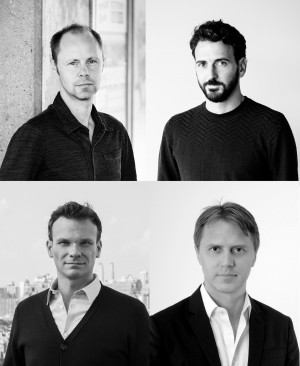
OMA has
announced the addition of four new equity partners, all promoted from
Associate level, to take its total number of partners to ten. The move
is a reflection of OMA’s increasing workload in both architectural
projects, and also the increasing involvement of AMO,
the company’s research offshoot. With two of the new partners based in
their overseas offices, it also represents a move to strengthen their
work in markets outside of their European base. Read on after the break
for details of all four new partners.
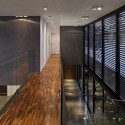
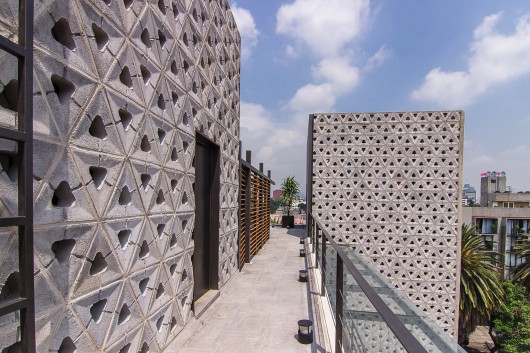
Architects: LoebCapote Arquitetura e Urbanismo
Location: São Paulo – São Paulo, Brazil
Architect In Charge: Roberto Loeb And Luis Capote
Design Team: Damiano Leite, Chantal Longo
Area: 90.0 sqm
Year: 2013
Photographs: Leonardo Finotti
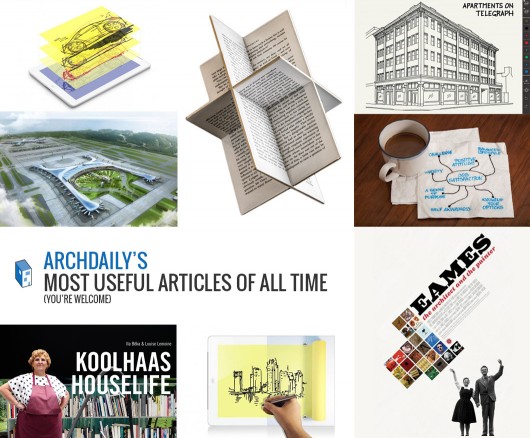
As summer draws to an end and we enter into the last quarter of 2014,
we decided to round-up a selection of the most useful articles we’ve
published over the past three years. Ranging from The 40 Architecture Documentaries to Watch in 2014 to The 10 Most Overlooked Women in Architectural History, we’ve also brought together app guides, career tips, and city guides. Alongside links to open-source CAD
files and cut-out people, we’ve also featured book recommendations,
study tips, and links to our complete coverage of some of the world’s
major architectural events and prizes. Delve into our collection and discover what our readers have found most useful!
Courtesy of URBED
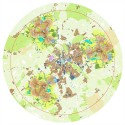
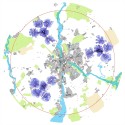
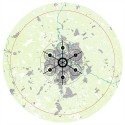
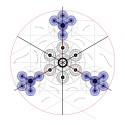
British urban design consultancy URBED (Urbanism, Environment, Design) have been announced as the winners of the 2014 Wolfson Economics Prize for their proposal to reenergise the Garden City (GC) movement, first conceived by Sir Ebenezer Howard in 1898. David Rudlin and Nicholas Falk’s
submission argues that forty cities in England, including Northampton,
Norwich, Oxford, Rugby, Reading and Stafford, could benefit from ‘GC
status’. The award comes in the wake of polling conducted for the prize
showing that 68% of the 6,166 Britons polled thought that garden cities
would protect more countryside than the alternatives for delivering the
housing we need.
Read about URBED’s submission, and the fictional town of Uxcester, after the break.
<a href="http://www.vimeo.com/93412026">http://www.vimeo.com/93412026</a>
“What does architecture mean? Does it mean something? Where do you put it?” These are a few of the questions Jacques Herzog poses
in this 1998 lecture at the Berlage Institute. Inspired by the concept
that architecture is inherently a form of communication, Herzog, who
co-founded Herzog & de Meuron
with Pierre de Meuron, highlights nine of the firm’s projects which all
share similarities that feed into one another. The lecture, Herzog
explains, is about using varied forms of language to create a
conversation. Basel, a
Swiss city bordering three countries and the home base of the firm, is
characterized by many languages. Architecture, Herzog argues, is also a
choreographed dance of languages, including those of art, music, light,
void and mass, skin and surface, transparency and obscurity, layering
and materiality.
Beginning with the Goetz Collection in Munich and
describing the bands of light that cut through its cubic form, and
continuing on to the play with existing urban factors and natural light
to enhance the “impressive mass” of the Tate Modern, Herzog describes the poetry of design. He continues on to discuss Studio Remy Zaugg, a collaboration with Remy Zaugg for the Centre Pompidou, a psychological look at the urban study of Basel, the proposal for the MOMA Extension in New York, the Pritzker winning Signal Box, and the complex conceptual and physical layers of both the Laban Dance Centre in Deptford and the Dominus Winery in
Napa. At the end, Herzog requests “critical” questions from the
audience, inviting an exploratory conversation that provides insight
into the design process of the architects and the experience of the
users.
In answering an audience member’s question, Herzog describes the
mindset behind his dynamic practice: ”If I knew what I’m doing, I
probably wouldn’t do it anymore. I wouldn’t be interested in getting up
in the morning, if I knew that’s exactly how architecture works…it would be boring, if I knew this is my way.”
Don’t miss the other lectures in The Berlage Archive series:
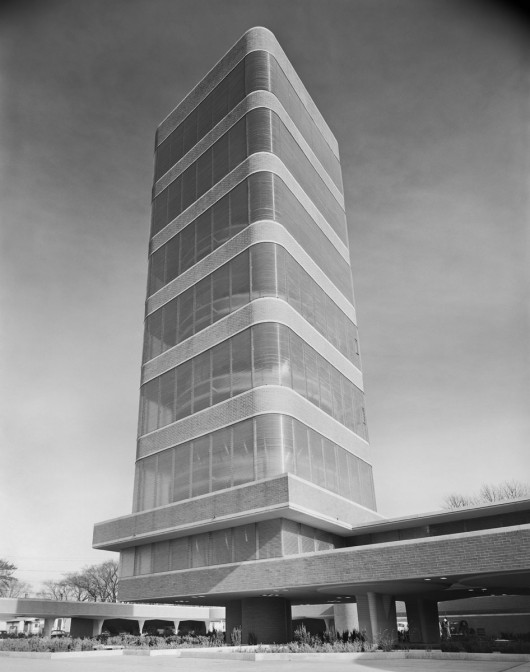
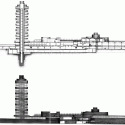
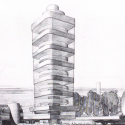
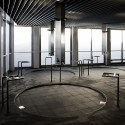
The next time you catch the scent of a Glade air freshener or evade pesky mosquitoes thanks to Off!, think of Frank Lloyd Wright. His 1950 building for the SC Johnson Research Tower at their headquarters in Racine, Wisconsin, was home to the invention of many of their landmark products.
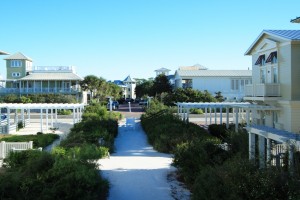
Andrés Duany, a founding partner of Miami firms Arquitectonica and Duany Plater Zyberk & Company and a co-founder of the Congress for New Urbanism,
turns 65 today. As an advocate of New Urbanism, since the early 1990s
Duany has been instrumental creating renewed focus on walkable, mixed
use neighborhoods, in reaction against the sprawling, car-centric
modernist urbanism of the previous decades. More about Duany and New
Urbanism after the break.

















No comments:
Post a Comment
Please leave a comment-- or suggestions, particularly of topics and places you'd like to see covered