
Detroit Is Taking the Lead in the Community Benefits Movement
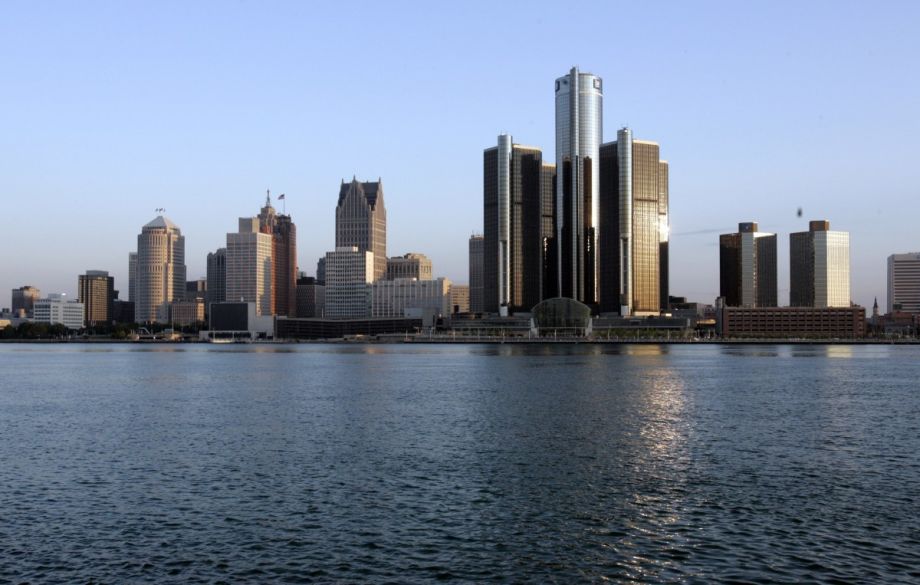
(AP Photo/Carlos Osorio)
Detroit is looking to become the first city in the country to require that developers invite community members to the table when negotiating megaprojects. City council is looking to pass a community benefit agreements ordinance in the next few weeks.
For new projects with an investment of at least $15 million, expansions or renovations of at least $3 million, or projects seeking at least $300,000 in public tax subsidies, developers would have to create legally binding documents guaranteeing jobs or quality-of-life protections for the community that is going to be impacted by the development.
Rashida Tlaib first advocated for mandated CBAs while serving as a Michigan State Rep. Since leaving office in January, she’s been fighting opposition to such an ordinance as the community partnerships and development director for the Sugar Law Center for Economic and Social Justice. I spoke to Tlaib about what impact this could have on Detroit and for other cities that might take their lead.
When did you first start thinking about a community benefit agreements ordinance for Detroit?
I want to say, eight or nine years ago with the announcement of a new international bridge crossing into Canada. That’s the first time I started hearing the words “community benefits agreement.” A billion-dollar, massive transportation project that was going to be landed in one of the poorest, most challenging neighborhoods, Delray. Many of the community residents had recognized that saying no to the projects wasn’t working anymore and trying to get a seat at the table would be a better option.
I want to say, eight or nine years ago with the announcement of a new international bridge crossing into Canada. That’s the first time I started hearing the words “community benefits agreement.” A billion-dollar, massive transportation project that was going to be landed in one of the poorest, most challenging neighborhoods, Delray. Many of the community residents had recognized that saying no to the projects wasn’t working anymore and trying to get a seat at the table would be a better option.
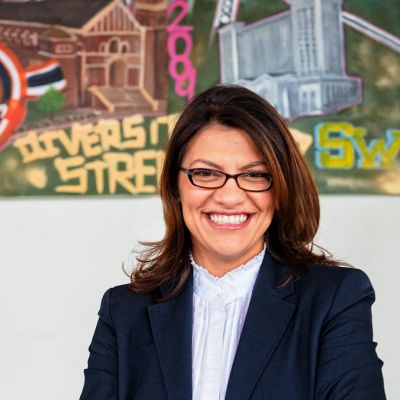
Rashida Tlaib
Our public resources and our land in the city of Detroit is extremely precious. As we move forward — knowing that our politicians come and go — how do we make sure that there’s an embedded process no matter who the leadership, no matter who is elected, that there is this process within that always has the community be part of those discussions?
Which benefits are you hoping CBAs will guarantee?
Jobs are obviously at the heart of conversation. But, I hear people talking about air quality, crime and public safety. Can the stadiums explore their public safety and policing beyond the hockey stadium?
Jobs are obviously at the heart of conversation. But, I hear people talking about air quality, crime and public safety. Can the stadiums explore their public safety and policing beyond the hockey stadium?
Every time I think about a community benefits agreement for the bridge specifically, I think about it being a model bridge that is going to have an air quality program or a volunteer program to get trucks retrofitted. One of the things I heard residents ask is, “Rashida, for the money that they’re getting for the land, could they get bus covers?” Those are the kinds of basic needs that a community who is going to have large transportation pressures are thinking about.
The problem though, is that people think that we’re actually asking for swimming pools and golf courses when we’re not.
What are your hopes for the next steps of getting the ordinance passed?
It sounds like in the next few weeks, we’re going to have some movement on it. According to Council President [Brenda] Jones’ office, we will pass an ordinance that will be current law in the city of Detroit for various projects, depending on the triggers.
It sounds like in the next few weeks, we’re going to have some movement on it. According to Council President [Brenda] Jones’ office, we will pass an ordinance that will be current law in the city of Detroit for various projects, depending on the triggers.
Do you hope that the fight for a citywide ordinance in Detroit will empower other cities to follow your lead?
Absolutely, I think there’s already this national movement going on with communities creating the movement and getting their city council members to use it as leverage. What I’ve found nationally is there seems to be more pull from various community folks. You see it in San Francisco, you see it in Pittsburgh, and we’ve seen it happen and be extremely successful.
Absolutely, I think there’s already this national movement going on with communities creating the movement and getting their city council members to use it as leverage. What I’ve found nationally is there seems to be more pull from various community folks. You see it in San Francisco, you see it in Pittsburgh, and we’ve seen it happen and be extremely successful.
We could have gotten a community benefits agreement with the hockey stadium. There were three votes that went before city council. They could have decided to set aside that vote until that mega-billion-dollar company agreed for a community benefits agreement and negotiated for a community benefits agreement with the residents and the host community and neighborhood, and they did not do that.
We are embedding it into a Detroit ordinance, [because] I think it was just critical. I think Council President Jones hit it on the head when she said, ‘Look, when I’m gone, I want something in place so we’re not always relying on trying to reeducate people that are coming into office.’
This interview has been edited for length and clarity.
The Equity Factor is made possible with the support of the Surdna Foundation.

Alexis Stephens is Next City’s urban economics fellow. She’s written about housing, pop culture, global music subcultures, and more for publications like Shelterforce, Rolling Stone, SPIN, and MTV Iggy. She has a B.A. in urban studies from Barnard College and an M.S. in historic preservation from the University of Pennsylvania.

“I Want LRT, Not BRT,” Says Suburban Perth Mayor
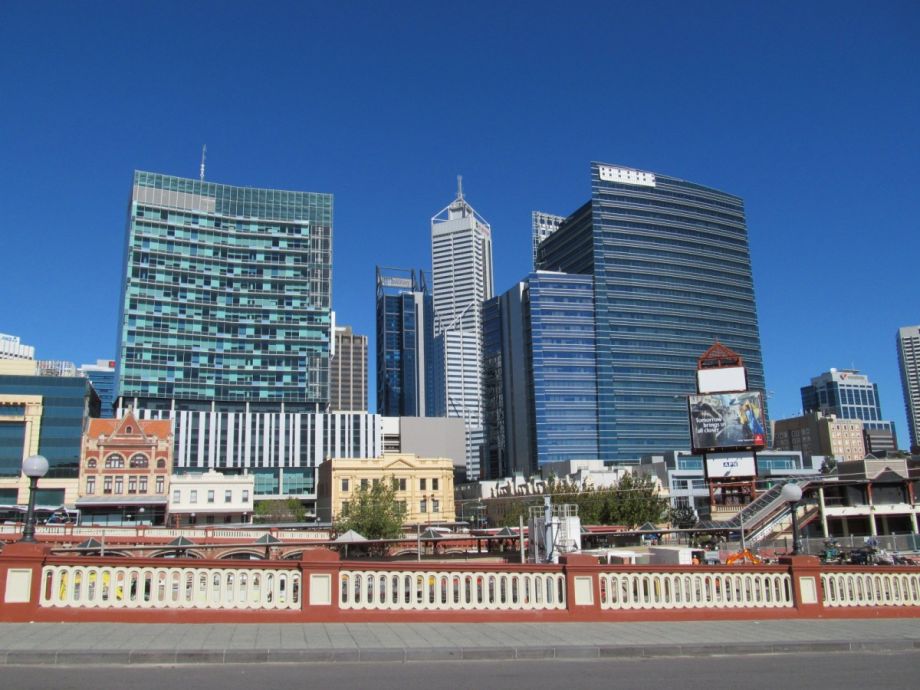
At least one mayor isn’t pleased with a proposal to replace light rail with BRT in Perth, Western Australia, above. (Photo by Orderinchaos)
Our weekly “New Starts” roundup of new and newsworthy transportation projects worldwide.
Proposal to Replace LRT With BRT Draws Fire
The state government in Western Australia sought re-election on a platform that included a promise to build a 22-km, A$2.5 billion ($1.92 billion U.S.) light-rail line that would run from Balga, a northern suburb of the state capital of Perth, into the city center before splitting into branches serving Queen Elizabeth II Medical Centre and the Causeway.
The state government in Western Australia sought re-election on a platform that included a promise to build a 22-km, A$2.5 billion ($1.92 billion U.S.) light-rail line that would run from Balga, a northern suburb of the state capital of Perth, into the city center before splitting into branches serving Queen Elizabeth II Medical Centre and the Causeway.
Now that government, headed by State Premier Colin Barnett, is proposing replacing that project with a bus rapid transit line instead, and that has at least one local official upset.
The Perth Sunday Times’ Perth Now site reports that John Carey, mayor of the near northern suburb of Vincent, blasted Barnett’s announcement that the Western Australia Ministry of Transport will instead study the relative merits of both the original light-rail proposal and a BRT line. The cost of the latter would be roughly half that of the light-rail line: A$1.2 billion ($962.3 million U.S.)
Barnett defended the move, saying that a BRT system could be upgraded to light rail in the future, but Carey criticized it, calling the move “a lost opportunity for a transitional project. To now turn around, after years of promises, to say, ‘we’ll give you some buses instead,’ just doesn’t cut it.
“You get a major transformation of centers around rail nodes. You won’t get that kind of renewal around a rapid bus transit system.”
Transport Minister Dean Nalder, however, said that in light of both the state government’s worsening finances and the fact that work on the light-rail line, called MAX, had already been deferred until 2017, it would be “irresponsible” not to examine a cheaper alternative. “If we can use buses and deliver the same outcomes [as rail] and do it at half the cost, why wouldn’t we explore it?” Nalder said.
Nalder plans to present a business model to the state cabinet next year.
Chicagoans Mull Return of Streetcars
The last of Chicago’s “Green Hornet” PCC streetcars pulled into the carbarn for the last time in 1958. Now, the Chicago Gazette reports, a local advocacy group has launched a study to make a case for bringing streetcars back to the Windy City.
The last of Chicago’s “Green Hornet” PCC streetcars pulled into the carbarn for the last time in 1958. Now, the Chicago Gazette reports, a local advocacy group has launched a study to make a case for bringing streetcars back to the Windy City.
The group, Chicago Streetcar Renaissance, is proposing a six-mile streetcar route it has dubbed the “Superloop.” The line would begin at Ogilvie Transportation Center in the Loop, then proceed south to Navy Pier, the museum campus near Soldier Field, and McCormick Place. (The group also proposes a starter line that would revive the city’s last streetcar line, which ran along Clark Street; the starter line would operate along Clark from Wrigley Field to the Loop.)
The proposed Superloop would connect a number of popular local attractions not directly served by public transit now, including the Shedd Aquarium, Adler Planetarium, Field Museum, Northerly Island, and the planned Lucas Museum.
Grant Park Conservancy President Bob O’Neill, whose group is working with CSR on the proposal, said, “Moving all these people, local residents and tourists, around the downtown area with light rail is a really clean way of doing it. It’s also pretty unobtrusive. It’s quiet and less polluting, and it prevents the bunching of buses.”
But it would also be pretty expensive: CSR estimates that the Superloop would cost $350 million to build. That works out to about $57 million per mile; by comparison, a BRT line the city plans to build along Ashland Avenue will cost about $9.9 million per mile. CSRargues that greater passenger capacity and lower operating and maintenance costs make the streetcar a superior choice nonetheless. The group’s study aims to assess all of the economic impacts of the proposed line.
Second Metro Line Opens in Warsaw
Sunday, March 8th saw the inauguration of service on the initial 6.5-km section of Line M2, Warsaw’s second metro line, with a day of free rides on the route, according to an item in the International Railway Journal.
Sunday, March 8th saw the inauguration of service on the initial 6.5-km section of Line M2, Warsaw’s second metro line, with a day of free rides on the route, according to an item in the International Railway Journal.
The east-west line runs under the Vistula River and connects Dworzek Wileński, east of the city center, with Rondo Daszyńskiego on the city’s west side. The line connects with the existing Line M1 at Świętokrzyska; the new M2 station there is the deepest on the Warsaw Metro, 23 meters below the street.
The opening of Line M2 took place a year later than had been planned. An Associated Press story noted that construction was delayed because of the discovery of unexploded World War II munitions and a water leak that flooded a nearly completed station. The project was completed in five years at a cost of 4.2 billion zlotys ($1.1 billion U.S.)
The city of Warsaw sought bids last fall for the next phase, which will extend the line to the east and the west in segments totaling 6.5 km in length. The 4-billion-zloty ($1.05 billion U.S.) extensions are scheduled to go into service in 2019.
Know of a project that should be featured in this column? Tweet @MarketStEl using the hashtag #newstarts.
The Works is made possible with the support of the Surdna Foundation.

Philadelphia freelance writer Sandy Smith runs the Philly Living Blog for Noah Ostroff & Associates, a Philadelphia real estate brokerage. A veteran journalist with nearly 40 years’ experience, Smith writes extensively on transportation, development and urban issues for several media outlets, including Philadelphia magazine online.


No comments:
Post a Comment
Please leave a comment-- or suggestions, particularly of topics and places you'd like to see covered