
New FAA Drone Rules Are Thankfully Lenient But a Headache for Amazon
The Drone rules will probably be TOO lenient for people like my old friend Paul M. in Illinois, who says he has his goose gun ready for any drones that fly over HIS house


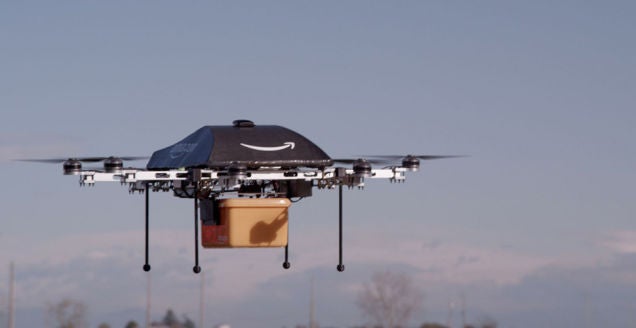
The Federal Aviation Administration just published its proposed rulemaking on commercial drone regulations. These regulations come after a leak, reported by Forbes over the weekend, that outlined some of the FAA's thinking on what the future of American skies was going to look like.
In short, it's great for commercial hobbyists and photographers and bad for big companies like Amazon.
To be clear, this is for non-recreational drone flights, so none of this applies if you want to go out in your backyard and take a dronie or something. You can read the FAA's full regulations here, but these are the juicy highlights:
- Unmanned aircraft must weigh less than 55 lbs. (25 kg).
- Visual line-of-sight (VLOS) only; the unmanned aircraft must remain within VLOS of the operator or visual observer.
- At all times the small unmanned aircraft must remain close enough to the operator for the operator to be capable of seeing the aircraft with vision unaided by any device other than corrective lenses.
- Small unmanned aircraft may not operate over any persons not directly involved in the operation.
- Proposes a microUAS option that would allow operations in Class G
airspace, over people not involved in the operation, provided the operator certifies he or she has the requisite aeronautical knowledge to perform the operation. - Daylight-only operations (official sunrise to official sunset, local time).
- Maximum airspeed of 100 mph (87 knots).
- Maximum altitude of 500 feet above ground level.
These rules are much more lenient than originally feared. The Wall Street Journal reported that everyone would need a license to operate a drone, and that's not entirely true. Instead, the FAA is proposing what they call an "aeronautical knowledge" test where you'll basically make sure that you know what the airspace rules are. As long as you're over 17 years old and take the test every two years, you're good to go. The FAA says it's also asking for comment on how to implement a more "flexible framework" for micro drones under 4.4 pounds.
The big caveat and major headache for Amazon, and other companies interested in autonomous drone delivery, is the "visual line-of-sight only" part, which pretty much defeats the company's PrimeAir plans and also Google's Project Wing program, at least for now. The FAA said it didn't want companies using drone delivery back in June, and it still seems to be holding onto the idea.
However, the FAA is open for comment on that restriction as well, saying " the FAA is asking for comments on whether the rules should permit operations beyond line of sight, and if so, what the appropriate limits should be." The FAA probably wants to remain as flexible as possible with these rules, so as not to completely scare off (which is already happening) what could potentially be a multi-billion dollar industry.
Once these proposed rules are published in the federal register, you'll have 60 days for comments. So if you don't like what you're reading (Mr. Bezos, hello?), make it known. [FAA]


No comments:
Post a Comment
Please leave a comment-- or suggestions, particularly of topics and places you'd like to see covered