
GM's Windshield Wipers Can Catch Fire in Recalled Trucks

General Motors is telling owners of some SUVs not to use their windshield wipers because an electrical short could cause the wiper motor to catch fire.
The company is recalling nearly 32,000 Buick Enclave, Chevrolet Traverse and GMC Acadia SUVs from the 2016 model to fix the problem.
Only 6,400 were sold and the rest are being held at dealerships until they are repaired. Most are in North America.
GM says if weather stops owners from taking their SUVs to dealers, it will pick up the vehicles for service. It also will arrange rental cars if parts aren't available.
Dealers will replace faulty wiper motor covers that allow some electrical terminals to come in contact with each other. Parts are being shipped and will be used first to fix customer vehicles and those that have been sold.
The problem was discovered when a wiper motor overheated at a factory near Lansing, Michigan, where the SUVs are made. The plant's quality manager reported the problem on Sept. 21 through GM's "Speak up for Safety" program, and GM began investigating five days later.
The company says no fires have happened outside the plant.
Top U.S. VW Exec Blames 'A Couple of Software Engineers' for Scandal
Volkwagen's top executive in the U.S. told lawmakers on Thursday that cheating on emissions with the use of software in diesel cars was not a corporate decision, but something that "individuals did."
"This was a couple of software engineers who put this in for whatever reason," Michael Horn, VW's U.S. head, said about the software code designed to cheat on emissions tests, which the company put in diesel cars since 2009.
Rep. Joe Barton, R-Texas, asked Horn if he really believed that senior level corporate managers had no knowledge of the software, which was first installed on cars for the 2009 model year.
"I agree it's very hard to believe," Horn replied.
Horn was testifying under oath to the House of Representatives Oversight and Investigations panel about the emissions scandal that has wiped away more than a third of the company's market value and sent tremors through the global auto industry.
Earlier, Horn offered a "sincere apology" for the scandal after committee members said the company violated the public's trust.
"On behalf of our company, my colleagues in Germany and myself, I would like to offer a sincere apology for Volkswagen's use of a software program that served to defeat the regular emissions testing regime," he said.
Calling the company's admission "deeply troubling," Horn said, "We have broken the trust of our customers, dealerships, and employees, as well as the public and regulators."
As Horn began his testimony, lawmakers from both parties fondly recalled their first VWs and then laced into the company for betraying the public's trust.
The German automaker admitted last month that it installed on-board computer software designed to cheat on government emissions tests in nearly 500,000 of its four-cylinder "clean diesel" cars sold in the U.S.
Rep. Fred Rep. Fred Upton, R-Mich., chairman of the House Energy and Commerce Committee, said Volkswagen "has long enjoyed an almost cultish following dating back to the Beetle. But through the years something apparently became rotten in Wolfsburg and cheating and betrayal became part of the VW game plan."
Rep. Tim Murphy, R-Pa., chairman of the subcommittee on oversight and investigations, said "the behavior to which VW admitted represents a fundamental violation of public trust."
Horn, a 51-year-old German and veteran VW manager who took the reins of the brand's American subsidiary last year, told Congress that VW plans to withdraw applications seeking U.S. emissions certifications for its 2016 model Jettas, Golfs, Passats and Beetles with diesel engines. That raises questions about whether a "defeat device" similar to that in earlier models is also in the new cars.
By withdrawing the applications for the 2016 models, VW is leaving thousands of diesel vehicles stranded at ports nationwide, giving dealers no new diesel-powered vehicles to sell. It wasn't immediately clear when VW would refile its application.
In Germany, prosecutors searched VW headquarters and other locationsThursday for material that would help clarify who was responsible for the cheating. The searches were intended to "secure documents and data storage devices" that could identify those involved in the alleged manipulation and explain how it was carried out, prosecutors said.
Meanwhile, it remains unclear what a newly disclosed device found in some VW models does. Liz Purchia, a spokeswoman for the Environmental Protection Agency, said VW recently gave the agency information on an "auxiliary emissions control device." The EPA and California Air Resources Board are investigating "the nature and purpose" of the device, she said.
VW said such devices can sense engine performance, road speed "and any other parameter for activating, modulating, delaying or deactivating" emissions controls.
The lack of certification is bad news for American VW dealers who hoped to put the new models on sale soon. For some dealerships, the diesel models accounted for about one-third of sales.
Tom Backer, general manager of Lash Volkswagen in White Plains, New York, said his dealership had lost three deals with potential buyers because he could not get the new cars.
"It's definitely a stain on the brand's image," he said.
VW acknowledged the deception to U.S. regulators on Sept. 3.
More than year earlier, researchers at West Virginia University published a study showing the real-world emissions of the company's Jetta and Passat models were far higher than allowed. The same cars had met emissions standards when tested in the lab.
VW was able to fool the EPA because the agency only tested the cars on treadmill-like devices called dynamometers and didn't use portable test equipment on real roads. The software in the cars' engine-control computers determined when dynamometer tests were under way. It then turned on pollution controls that reduced the output of nitrogen oxides that contribute to smog and other pollution, the EPA has said.
Only when the EPA and California regulators refused to approve VW's 2016 diesel models for sale did the company admit earlier what it had done.
VW Scandal: German Prosecutors Raid Company Facilities for Evidence
BERLIN -- German prosecutors raided Volkswagen's headquarters and other offices on Thursday as part of their investigation into the carmaker's rigging of diesel emissions tests.
Prosecutors in Braunschweig, near the company's headquarters in Wolfsburg, said the aim of the searches was to "secure documents and data storage devices" that could identify those involved in the alleged manipulation and explain how it was carried out.
Volkswagen said it was supporting the investigation and had handed over a "comprehensive" range of documents.
Almost three weeks after it confessed publicly to rigging U.S. emissions tests, Europe's largest carmaker is under huge pressure to identify those responsible, fix affected vehicles and clarify exactly how and where the cheating happened.
The biggest business crisis in Volkswagen's 78-year history has wiped more than a third off its share price, forced out its long-time chief executive, prompted investigations across the world and rocked both the car industry and German establishment.
Later on Thursday, the company's top U.S. executive will tell a panel of U.S. lawmakers he knew the carmaker might be breaking U.S. emissions rules as long as 18 months before it admitted cheating diesel tests to regulators.
The admission by Michael Horn, in a written testimony to a congressional oversight panel a day ahead of the hearing, is likely to raise questions about why the company did not act more quickly to tackle its wrongdoing.
"In the spring of 2014 ... I was told that there was a possible emissions non-compliance that could be remedied," Horn, president and CEO of Volkswagen Group of America, said in his statement published on a U.S. House of Representatives website.
"I was also informed that the company engineers would work with the agencies to resolve the issue," he said, without identifying the people providing him with the information.
It was not until this year, on Sept. 3, that Volkswagen told U.S. regulators it had installed so-called "defeat devices" in some diesel engines to mask their true level of toxic emissions. U.S. regulators made public the wrongdoing on Sept. 18.
Volkswagen has come under fire on both sides of the Atlantic for its handling of the crisis, with lawmakers, investors and customers saying it has been too slow to release information. Analysts are still unsure how widespread the cheating was.
Germany's Sueddeutsche Zeitung newspaper reported on Thursday that Volkswagen's manipulation software was switched on in Europe, citing a company spokesman.
The carmaker has previously said the software could be installed on up to 11 million vehicles, mostly in Europe, but that for the majority of them it "does not have any effect."
In a statement on Thursday, Volkswagen said it was still investigating whether or to what extent the software interfered illegally with vehicles.
Fiat Chrysler Avoids Strike With New Tentative Contract
Fiat Chrysler has avoided an expensive strike at its U.S. plants after reaching a tentative agreement with the United Auto Workers union.
UAW announced the agreement just after 11:59 p.m. Wednesday, which was the deadline the union had set to reach a new deal or possibly go on strike.

Details of the agreement weren't immediately released. Local union leaders will vote on the tentative agreement this Friday at a meeting in Detroit.
This is the second agreement FCA and the union have reached. Last week, UAW members overwhelmingly rejected a previous tentative agreement, saying it didn't go far enough in restoring benefits workers lost in previous contracts.
The UAW represents around 40,000 FCA factory workers at 23 U.S. plants.
Volkswagen Recalling Diesels in January for 'Defeat Device'
Volkswagen's new CEO Matthias Mueller hopes to see a recall affecting as many as 11 million of the German maker's diesel vehicles begin in January - but for the 482,000 of those cars sold in the U.S., VW must still win regulatory approval for the planned retrofit.
Even as Volkswagen moves ahead with plans to fix vehicles equipped with software designed to cheat on emissions tests, its problems are mounting. Among other things, the Senate Finance Committee has opened a probe investigating whether the carmaker falsely claimed more than $50 million in tax credits for meeting emissions standards.
"If all goes according to plan, we can start the recall in January. All the cars should be fixed by the end of 2016," Mueller says in an interview published today by the German newspaper, the Frankfurter Allgemeine Zeitung, or FAZ.
But that timetable might be difficult to meet, especially in the U.S., where the scandal was originally touched off last month.
The Environmental Protection Agency revealed that VW had used a so-called "defeat device," software coded into its engine control system, to detect when vehicles using its WA 189 engine were undergoing emissions tests. Otherwise, the 2.0-liter diesels were programmed to emit as much as 40 times the allowable levels of toxic gases such as oxides of nitrogen, or NOx. The scam was apparently developed when the engineering team was unable to meet a goal of low emissions, good power and high mileage.
Several sources within VW said that the automaker is currently meeting with the EPA to get regulators' approval for a proposed fix that would meet emissions standards. But it must demonstrate that the solution not only works initially but that it will continue to comply with pollution mandates for 150,000 miles. Complicating matters, VW has revised the U.S. version of the WA 189 engine twice since it was introduced seven years ago.
The subterfuge has generated a tidal wave of bad press for Volkswagen, and a mounting series of legal problems. The automaker has already launched its own internal investigation and Mueller said in his Wednesday interview that he believes the scam was the work of only a handful of employees. But it has already led to the ouster of his CEO predecessor, Martin Winterkorn, and the suspension of several other key engineering executives.
Winterkorn, in turn, has come under investigation by German federal prosecutors and could become a target in a separate criminal probe by the U.S. Justice Department. Adding to VW's legal woes, the chairman and the top Democrat on the Senate Finance Committee have sent a letter to the company raising the question of whether it claimed clean air credits of up to $1,300 a vehicle under "false representations to the U.S. government."
The 482,000 vehicles equipped with the defeat devices were "included (with) those that the company certified as qualifying for the advanced lean-burn technology motor vehicle credit," wrote Senators Orrin Hatch, a Utah Republican, and Ron Wyden, an Oregon Democrat.
VW already faces potential fines of up to $18 billion for failing to comply with the Clean Air Act. It could be in for additional penalties if the Justice Dept. investigation moves forward. Meanwhile, as many as a half-dozen class action lawsuits on behalf of owners have already been filed.
Among other issues, lawyers are likely to argue that the value of used VW diesels have fallen as a result of the scandal. A preliminary study by Kelley Blue Book found that in the weeks after the story broke the average auction price of models like the Passat, Jetta and Golf TDI models tumbled 13%.
VW's legal problems aren't limited to the U.S., however, with investigations underway, and lawsuits already filed, in countries stretching from Italy to South Korea.
The automaker has already set aside $7.3 billion to cover the cost of the scandal, a figure most analysts believe will fall well short of the final tally. And VW has given clear signs it agrees. Senior officials, as well as the labor leaders who participate in VW management, have warned of reduced profits and the likely need for major cutbacks in spending.
"We will need to call into question with great resolve everything that is not economical," Bernd Osterloh, head of VW's works council said during a meeting this week attended by more than 20,000 workers at a VW's headquarters in Wolfsburg, Germany.
The scandal seems all but certain to short-circuit Volkswagen's aggressive global growth plans. The maker nudged past Toyota to become the world's best-selling auto manufacturer during the first half of this year. But just the hold it has placed on selling the affected diesels could set it back into second for all of 2015.
And VW management now appears to be rethinking its growth strategy, among other things looking at planned model-line expansion plans and perhaps raising questions about some brands, such as the ultra-exclusive Bentley, CEO Mueller told the FAZ.
While he insisted the maker will "shine again," once it works through the crisis, he acknowledged it could take several years - and could leave it smaller.
"This crisis gives us an opportunity to overhaul Volkswagen's structures," Mueller said. "We want to make the company slimmer, more decentralized and give the brands more responsibility."
More from The Detroit Bureau:
Porsche Supercar Flies Off Maltese Track, Injuring 26, Five Critically
A limited-edition Porsche supercar flew off the track into the crowd Sunday at a fundraising event organized by the government of Malta, injuring 26 people, five of them critically, authorities said.
The car, a Porsche 918 Spyder capable of hitting 210 mph, was being demonstrated at Paqpaqli ghall-iStrina, a large annual auto show at Malta International Airport in Hal Farrug, which benefits Malta's Community Chest Fund charity, police and the government said.
The driver of the car, described by authorities only as "a man of foreign nationality," was seriously injured, said Chris Fearne, health secretary of the tiny island nation in the Mediterranean Sea.
The national police bureau said the driver lost control of the sports car and crashed into the barriers on the opposite side of the road, where spectators were watching.
"The car was speeding down the taxiway when a back wheel went on the grass," a witness told the Times of Malta newspaper.
The car was owned by British telecommunications millionaire Paul Bailey, Maltese media and sports car enthusiast publications reported. It couldn't immediately be confirmed whether he was at the wheel Sunday when it crashed about 2 p.m. (8 a.m. ET).
Fearne said some victims suffered severe head injuries, multiple fractures and abdominal injuries. Psychologists were called in to assist the victims and spectators, the government said.
Maltese President Marie-Louise Coleiro Preca canceled a foreign trip to visit the injured. Occasionally choking up at a news conference Sunday afternoon, she said the Community Chest Fund would support the victims.
Asked whether there should have been more precautions at the event, Coleiro Preca said that the accident was the subject of a magisterial inquiry and that "it would be unethical to comment on it."
The injured were being treated at Mater Dei Hospital in Msida, where Prime Minister Joseph Muscat visited the wounded.

Amid Scandal, Online Interest in Used Volkswagen Diesels Heats Up
Volkswagen's emissions scandal has created a busier online marketplace for the German automaker's used diesel vehicles in the United States.
Online used car marketplaces such as Kelley Blue Book or AutoTrader.com have seen a significant upswing in activity surrounding the specific vehicles affected by the scandal.
"On AutoTrader, we are seeing shopping for diesels up," said Michelle Krebs, a senior analyst at AutoTrader, who noted that the volume of shopping activity between private parties, including purchases and negotiations, is up by almost a fifth over the last week.
This comes as overall Volkswagen shopping across the site — including not just private sales but all new and used sales of Volkswagen models — is down 1 percent within the same time frame, Krebs said.
AutoTrader's sister company, Kelley Blue Book, is also seeing an increase in Volkswagen-related traffic. KBB.com has seen a 79 percent increase in people looking up the trade-in values of Volkswagens with turbodiesel engines on the site. Comparatively, Volkswagen total trade-in value lookups (including non-turbodiesel, or TDI, vehicles) have increased by only 10 percent.
Krebs said she believes the market is thriving on potential buyers looking for a good deal.
"We often seen spikes in shopping when something is in the news," she said. "Some of that's just curiosity, checking out what the prices are, but there may well be people that are looking to see if people are selling (used Volkswagen diesels) for cheap."
The U.S. online market trends come as there are indications that overall diesel Volkswagen sales are declining in Europe. MeinAuto.de, a German online car dealer, saw a 10 percent slip in inquiries last week, according to Deutsche Bank analysts. Additionally, a U.K. price data firm, Glass, said that Volkswagen TDI valuations fell 0.2 percent in September.
It's still too early to tell if U.S. Volkswagen owners are using online marketplaces to unload their used vehicles. Krebs said AutoTrader has no data on any increase in listings just yet.
Despite the increases in shopping activity, Karl Brauer, a senior analyst at Kelley Blue Book, told CNBC that the site hasn't seen any substantial or worthy valuation shifts so far.
"I think we see the potential for some downward slippage of values but probably only along the lines of 3 to 5 percent," he said.
Krebs said the pricing of Volkswagens on AutoTrader.com, both diesel and nondiesel, are a mixed bag.
"It appears private sellers are generally sticking with their prices of the (Volkswagen) diesels they have listed on AutoTrader overall, although they have dropped their listing prices specifically for the Beetle diesel and the Audi A3 diesel some," she said.
In terms of all inventory on the site (new, used and private sales), the Audi A3 and Volkswagen Beetle models saw the steepest decline of all Volkswagen diesel vehicles, dropping $547 and $260 respectively. The Passat diesel dropped only $88.
While online marketplaces are bustling, VW dealerships have been less forthcoming about sales trends. Dealerships in the New York City area that spoke with CNBC this week had little to say about how businesses was going and directed inquiries to Volkswagen's corporate office.
Volkswagen is expected to introduce a plan to address its emissions technology problem on or before Oct. 7.
Stifel Nicolaus analyst James Albertine told CNBC last week that Volkswagen had already been on a steady decline because of an aging product line, as well as competition from other automakers that are producing fresh models at overlapping prices.
Ferrari Set to Hit the Road in Advance of IPO Next Month
Fiat Chrysler Automobiles could launch its "road show" ahead of the eagerly awaited initial public offering of its Ferrari brand as early as Friday, according to reports by CNBC and auto industry news outlets.
The "road show" is intended to drum up investor interest ahead of the IPO and pricing of Ferrari stock, which is expected to take place next month.
The move could generate as much as $1 billion in much-needed revenue for FCA, but it also raises some serious questions about the future of the ultra-exclusive Ferrari brand. A debate over growth of Ferrari last year resulted in the ouster of long-time CEO Luca di Montezemolo, who favored a go-slow approach.
FCA CEO Sergio Marchionne has wanted to take more advantage of Ferrari's image in the global luxury market, and is expected to push to increase production of luxury cars and expand licensing of its prancing pony logo for a broader range of upscale goods.
"They're pitching it as a luxury goods company, rather than as a car company," said Joe Phillippi, a veteran automotive financial analyst with AutoTrends Consulting. "They're going against the grain of what Ferrari has been, which was part of the conflict that led to Montezemolo leaving."
Another factor in Montezemolo's departure may have been Ferrari's recent problems on the Formula One circuit after dominating that legendary racing series for much of the previous decade.
The IPO plan calls for the sale of 10 percent of Ferrari's shares. Another 80 percent would be distributed to existing Fiat Chrysler shareholders. The remaining 10 percent is held by Piero Lardi, the son of company founder Enzo Ferrari.
"It won't be a difficult (sell)," Marchionne said earlier this year, reflecting the general expectation that investors will snap up the shares of Ferrari if priced properly. The CEO has said he expects the brand will be valued at around $11 billion.
"We believe our history of excellence, technological innovation and defining style transcends the automotive industry, and is the foundation of the Ferrari brand and image," the company said in a registration statement filed with the U.S. Securities and Exchange Commission in July.
Marchionne had long resisted calls for an IPO, calling the company one of FCA's crown jewels. He appears to have reversed course due the trans-Atlantic automaker's need to fund future growth.
The IPO can't actually take place until Oct. 13 because of legal restrictions. The trans-Atlantic automaker is legally registered in the Netherlands and officially headquartered in London, where regulations forbid a spin-off of assets for at least a year after the Fiat and Chrysler merger.
Newly issued Ferrari shares will be listed on the New York Stock Exchange, as are those of Fiat Chrysler.
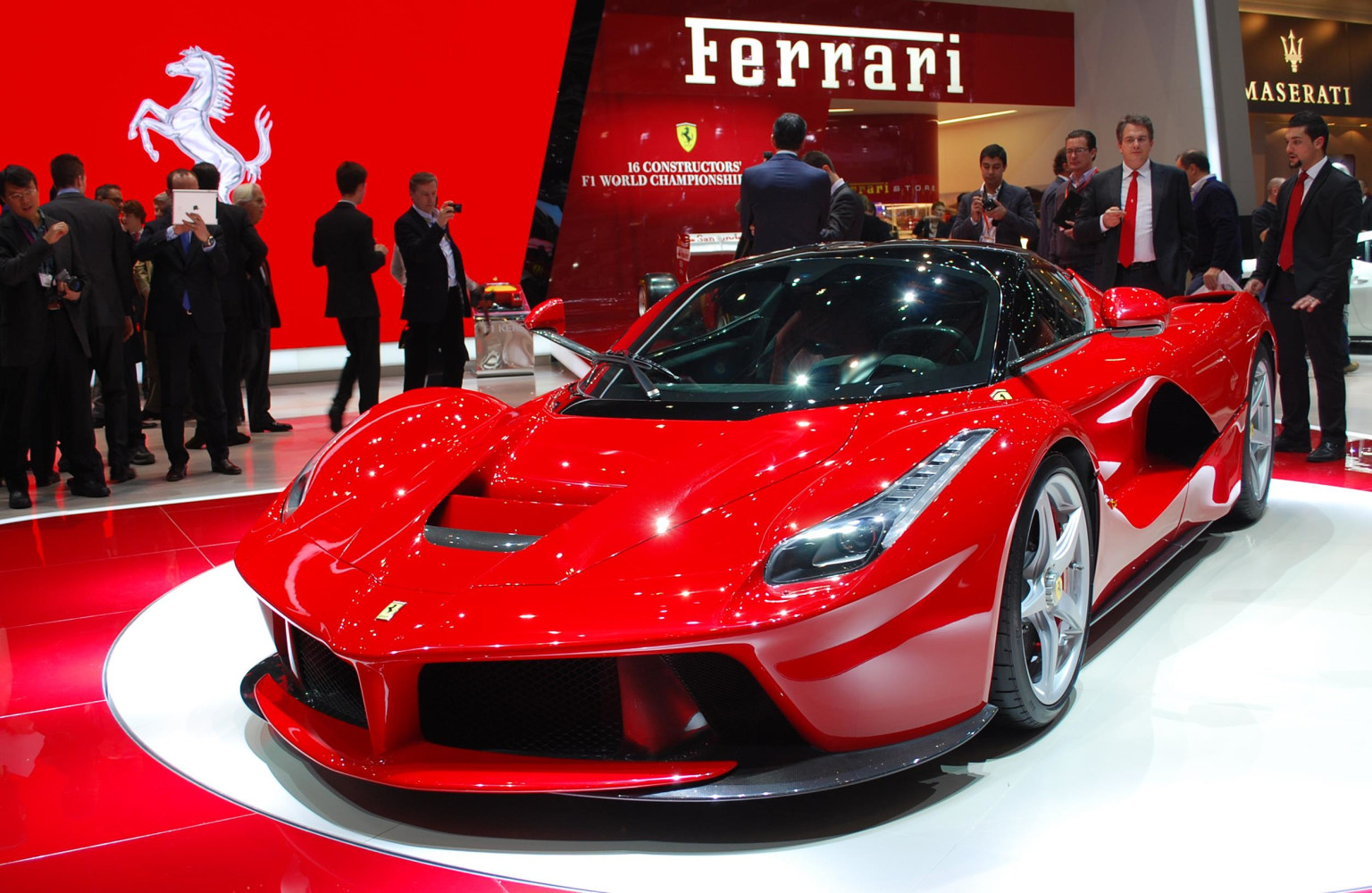
Based in Maranello, Italy, Ferrari was founded in 1947 and has built a fierce reputation both on and off the racetrack. It has formally limited production to just 7,200 vehicles a year and often has as much as a three-year waiting list for key product lines. Top models, such as the La Ferrari, regularly go for over $1 million.
In its prospectus, Ferrari said, "We pursue a low volume production strategy in order to maintain a reputation of exclusivity and scarcity among purchasers of our cars and deliberately monitor and maintain our production volumes and delivery wait-times to promote this reputation."
The definition of "exclusivity" is, of course, a matter of debate, and Ferrari may take a cue from ultra-luxury marques like Bentley that seem to have run into little resistance as they've pushed well above and beyond once-firm caps on production.
The Italian automaker already has lent its name and logo to Ferrari-branded items like sunglasses, watches and even laptop computers. It also may add new entertainment venues like the one it now operates in the Middle East. Ferrari World Abu Dhabi is the world's largest indoor theme park.
The real question is what it will do on the car side. Most observers expect production of traditional models to increase. But Ferrari could take a cue from Bentley and rival Rolls-Royce and target those who can't quite reach high enough for its current products.
Experts don't expect the IPO to have any impact on pricing of its current models, but some industry observers say it may decide to offer new lower-end vehicles at some point.
"They may opt to go down-market to grow their volumes," said Phillippi.
The challenge there would be to grow sales without diluting the Ferrari brand's carefully nurtured image.
More from TheDetroitBureau.com


No comments:
Post a Comment
Please leave a comment-- or suggestions, particularly of topics and places you'd like to see covered