

TONIGHT'S SKY
Sun
6:02 AM
7:51 PM
Sun
Moon
9:52 AM
9:43 PM
Waxing crescent
17%


The air up there
NASA's LADEE spacecraft confirms that the Moon’s exosphere is made up of mostly helium, argon, and neon


Indonesian Islands Eclipse
Explore Bali and witness a total solar eclipse in March 2016 with Astronomymagazine and TravelQuest International


New episode every other week!
Turn on your mind to what's really going on in the universe


Star formation explanation
Hubble finds evidence of galaxy star birth regulated by black hole fountain

Exclusive podcast series
Editor David J. Eicher conducts extensive interviews with the world's top astrophysicists, planetary scientists, and cosmologists


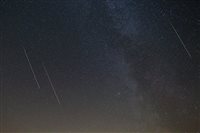
Milwaukee meteor fest
Thursday, August 13, 2015 | by Michael Bakich
Yes, you can see meteors from Milwaukee. Well, at least from a site slightly north of Brew City. Last night (August 12 — the only night near the maximum of the Perseid meteor shower that promised clear skies), my wife, Holley, and I decided to...

Tour the solar system: Pluto and the Kuiper Belt
Monday, August 10, 2015 | by Richard Talcott
Transcript Humanity recently captured the first close-up views of the Pluto system through the eyes of the New Horizons spacecraft. The mission was necessary because, frankly, Pluto doesn’t look like much from Earth. It glows at 14th magnitude,...
MORE ABOUT: PLUTO, KUIPER BELT

IAU day 5: Viewing the Sun with radar
Monday, August 10, 2015 | by Korey Haynes
Following my post from yesterday about radar, Monday at the International Astronomical Union (IAU) meeting revealed yet more radar tales. Miller Goss from the National Radio Astronomy Observatory (NRAO) shared the story of how the first original reco...

Change Your View: Fly in July
Friday, July 10, 2015 | by Celestron
Show us just how FLY you can be this July! Whether flying out of town for vacation, or making the work day fly by in the office, Celestron wants you to capture the moment and Change Your View on Summer Vacation. Catch all the details and see who's en...

IAU day 4: Radar from WWII to the outer solar system
Sunday, August 9, 2015 | by Korey Haynes
I'm still nominally at the International Astronomical Union meeting here in Honolulu. But most of the astronomers have taken a break for the weekend, leaving me to amuse myself for some of the time. This morning, I hopped a bus over to Pearl Harbor ...
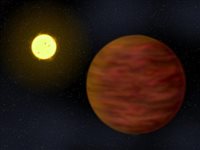
IAU day 2: What makes a brown dwarf?
Saturday, August 8, 2015 | by Korey Haynes
[Updated August 10] My second day at the International Astronomical Union's (IAU) general assembly meeting featured one of my favorite parts about attending science conferences: watching scientists fight! OK, astronomers are a pretty friendly bunch,...

Aloha from the IAU
Friday, August 7, 2015 | by Korey Haynes
The International Astronomical Union (IAU) holds its general assembly meeting only once every three years, for two full weeks. This is the meeting that infamously stripped Pluto of its planethood in 2006. This year, the resolutions up for vote cover ...
MORE ABOUT: IAU, KOREY HAYNES
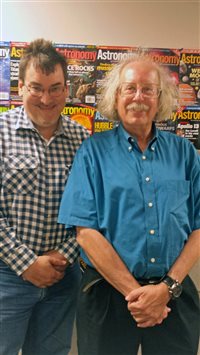
Visit from an old friend, Norm Sperling
Monday, August 3, 2015 | by David Eicher
This Monday morning, I had a delightful email from an old friend I hadn’t talked to in ages. Norm Sperling, well known astronomy enthusiast, editor, writer, and intellectual, was in the area, and he ended up having lunch with the Astronomy staf...
MORE ABOUT: DAVID J. EICHER
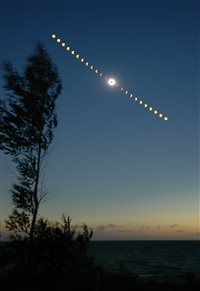
Only 750 days until the eclipse
Friday, July 31, 2015 | by Michael Bakich
Saturday, August 1, marks another milestone in the countdown toward the biggest public science event in history — 750 days until the total solar eclipse August 21, 2017. Rather than write a long blog about the importance of it, I’ll direc...
MORE ABOUT: ECLIPSE, MICHAEL BAKICH

Watch the Asteroid Day London discussion
Thursday, July 30, 2015 | by David Eicher
A month ago, June 30, astronomers around the world marked the first Asteroid Day, drawing attention to the need for a better survey of near-Earth asteroids. Now you can watch the panel discussion that took place at the Science Museum in London, invol...
MORE ABOUT: ASTEROID DAY, DAVID J. EICHER
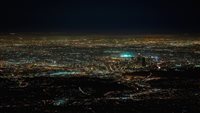
Humans cling to their primal fear of the dark
Wednesday, July 29, 2015 | by Eric Betz
Your chances of being attacked, robbed, or struck by a car are no worse on a dimly lit street. And yet, like cavemen huddled around a campfire, humans are still comforted by light. Most of the 7 billion people on planet Earth have never seen the Milk...

Astronomy magazine at EAA Airventure Oshkosh
Monday, July 27, 2015 | by David Eicher
On Friday, July 24, 2015, Senior Editor Michael Bakich and I traveled to the world’s greatest airshow, EAA Airventure Oshkosh, to scope out the events being held by NASA and other cool things. Each year, more than 10,000 pilots flock to Oshkosh...
MORE ABOUT: DAVID J. EICHER, EAA
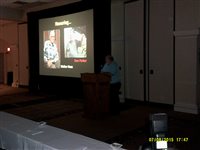
Mike Reynolds reports from ALCon 2015
Thursday, July 23, 2015 | by Michael Bakich
The Astronomical League (AL) and Association of Lunar and Planetary Observers (ALPO) held their annual meeting (the Astronomical League Convention, or ALCon) jointly July 6-11 in Las Cruces, New Mexico. The hosts were members of the Astronomical Soci...
MORE ABOUT: CONFERENCES
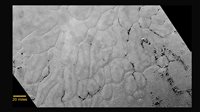
Making sense of Pluto
Monday, July 20, 2015 | by David Eicher
A week later, the incredible historic moment has passed. The flyby occurred. We have seen some spectacular images of Pluto and Charon. Let's take a breath to make sense of the Pluto we now know.First, congratulations to Alan Stern and the entire New ...
MORE ABOUT: DAVID J. EICHER, PLUTO
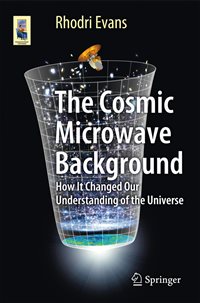
Check out Rhodri Evans' "The Cosmic Microwave Background"
Monday, July 20, 2015 | by David Eicher
It’s relatively rare that an astronomy book rolls along that I think astronomy enthusiasts MUST have. Such is the case, however, with The Cosmic Microwave Background, new from Springer. Welsh research fellow astronomer Rhodri Evans of Cardiff U...
MORE ABOUT: BOOKS, DAVID J. EICHER

Yuri Milner, Stephen Hawking, others announce unprecedented new SETI survey
Monday, July 20, 2015 | by David Eicher
A momentous event in searching for life in the universe occurred today during a press conference held in London. Breakthrough Prize chairman Yuri Milner, theoretical physicist Stephen Hawking, and a host of other scientists announced a $100 million e...
MORE ABOUT: DAVID J. EICHER

Asteroid Day blog post from Debbie Lewis
Thursday, July 16, 2015 | by David Eicher
Please read this new Asteroid Day blog post from Debbie Lewis, a risk crisis and disaster management specialist who is an Asteroid Day science advisor. I think you will find it thought provoking . . . Follow David J. Eicher on Twitter: www.twitter.co...
MORE ABOUT: ASTEROID DAY, DAVID J. EICHER
PICTURE OF THE DAYsee all »
Gibbous Moon
The gibbous Moon appears between First Quarter and Full Moon and between Full Moon and Last Quarter. It got its name because it appeared larger than either quarter Moon. In fact, skywatchers imagined a noticeable hump. The Latin word for “hump” is gibberas, which through the years evolved into “gibbous.” The same term became the name of the humpbacked ape family, “gibbon.” (10-inch Astro Systeme Austria ASA astrograph at f/6.8, SBIG STL-11000M CCD camera, red filter, sixteen 10-second exposures, stacked, taken October 4, 2014)


POPULAR

FREE EMAIL NEWSLETTER
Receive news, sky-event information, observing tips, and more from Astronomy's weekly email newsletter.
 Facebook
 Twitter
 Google+
EQUIPMENTsee all »


FREE PREVIEW
Astronomy tests Celestron’s SkyProdigy 6
This 6-inch telescope sets a new standard for ease of use.


GALLERIESsee all »


Click here to receive a FREE e-Guide exclusively from Astronomy magazine.
Find us on Facebook

More great sites from Kalmbach Publishing Co.:


No comments:
Post a Comment
Please leave a comment-- or suggestions, particularly of topics and places you'd like to see covered