
the world's most visited architecture website
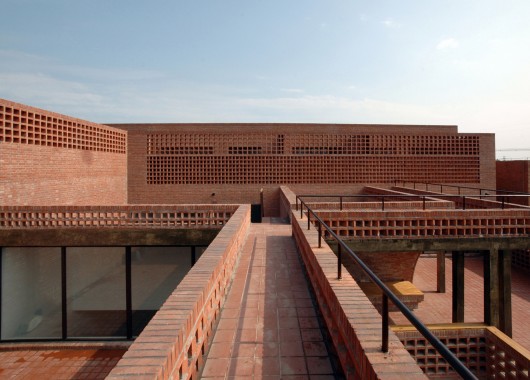
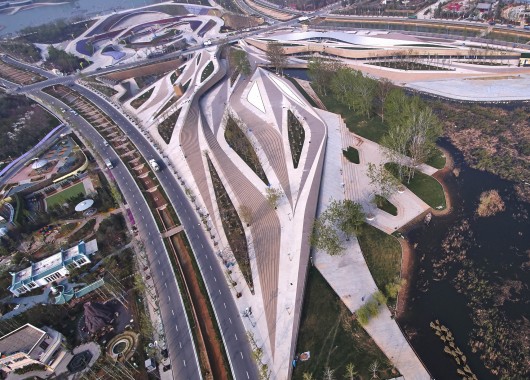
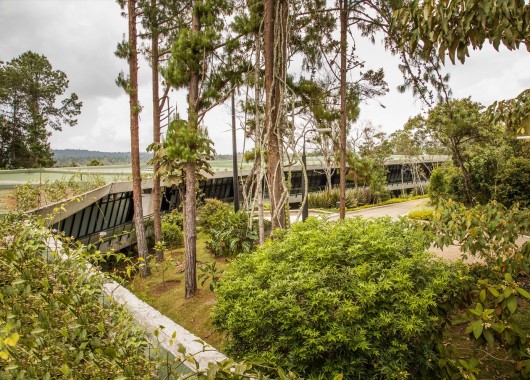

Customi-Zip / L’EAU design
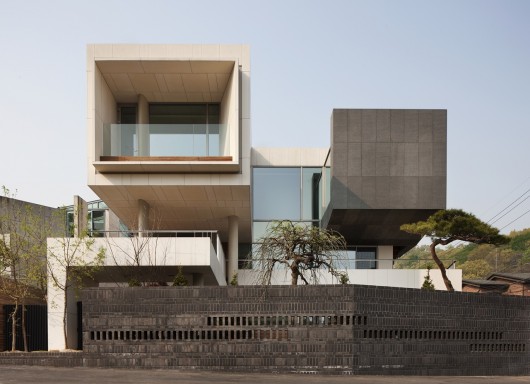
Architects: L’EAU design
Location: 416-4 Gwacheon-dong, Gwacheon-si, Gyeonggi-do, South Korea
Architect In Charge: Dongjin Kim
Area: 560.0 sqm
Year: 2013
Photographs: Park Wan-soon
Location: 416-4 Gwacheon-dong, Gwacheon-si, Gyeonggi-do, South Korea
Architect In Charge: Dongjin Kim
Area: 560.0 sqm
Year: 2013
Photographs: Park Wan-soon



House in Ningyo-cho / K+S Architects
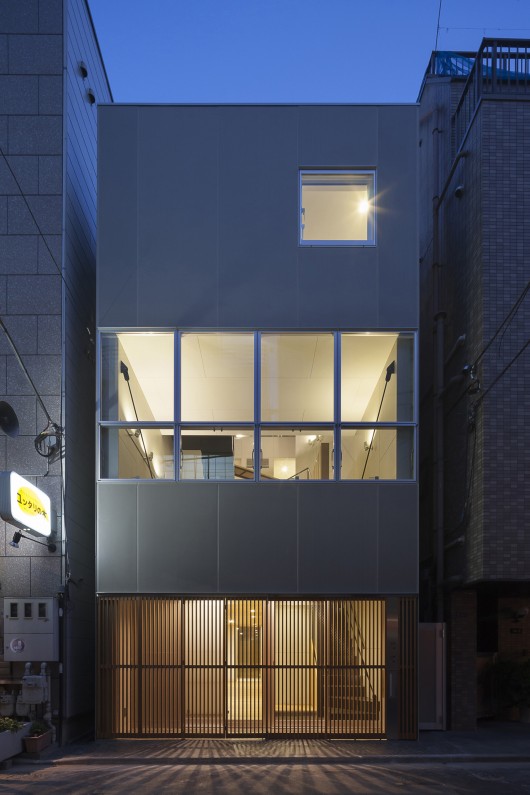
Architects: K+S Architects
Location: Chuo, Tokyo, Japan
Architects In Charge: Nobuya Kashima, Aya Sato
Area: 54.0 sqm
Year: 2014
Photographs: Hiroshi Ueda
Location: Chuo, Tokyo, Japan
Architects In Charge: Nobuya Kashima, Aya Sato
Area: 54.0 sqm
Year: 2014
Photographs: Hiroshi Ueda

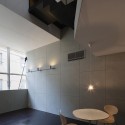
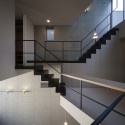
Cooroy Studio / JMA Architects
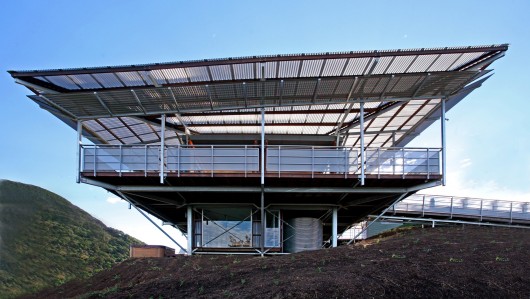
Architects: JMA Architects
Location: Cooroy QLD 4563, Australia
Project Team: John Mainwaring, Paolo Denti, Tom Kanchanasinith, Garth Hollindale
Year: 2008
Photographs: Peter Hyatt
Location: Cooroy QLD 4563, Australia
Project Team: John Mainwaring, Paolo Denti, Tom Kanchanasinith, Garth Hollindale
Year: 2008
Photographs: Peter Hyatt


Video: Jørn Utzon’s Nature-Inspired Sydney Opera House
Sydney Opera House recently created a video exploring how Jørn Utzon was inspired by the form and function of nature. While Jørn Utzon may not have seen himself as a pioneer ofsustainable techniques, sustainability was inherent in his design philosophy. Watch the video above to learn more.
Chrysalis Childcare Centre / Collingridge and Smith Architects
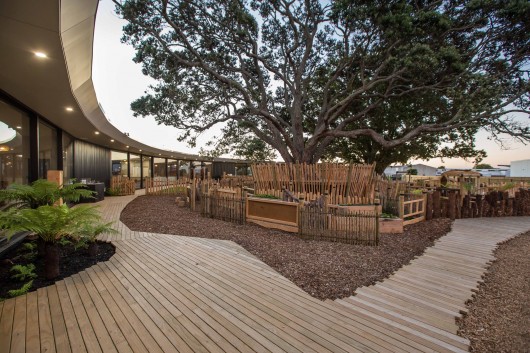
Architects: Collingridge and Smith Architects
Location: Auckland, New Zealand
Architect In Charge: Phil Smith, Graham Collingridge, Evan Crighton
Area: 800.0 sqm
Year: 2015
Photographs: Courtesy of Collingridge and Smith Architects
Location: Auckland, New Zealand
Architect In Charge: Phil Smith, Graham Collingridge, Evan Crighton
Area: 800.0 sqm
Year: 2015
Photographs: Courtesy of Collingridge and Smith Architects



David Chipperfield Disowns Milan’s Museum of Culture Over “Floor War”

The poor quality and laying of stone flooring in Milan‘s newly completed Museum of Culture has led its architect, David Chipperfield to dissociate himself with the building. Blasting officials for skimping on materials, the British architect is demanding his name be removed from the project, claiming the building is now a “museum of horrors” and a “pathetic end to 15 years of work” due to the low quality flooring.
On the contrary, Milan’s council says the material decision was made in the “interests of the taxpayers,” further claiming that, according to councillor Filippo del Corno, Chipperfield has been “unreasonable and impossible to please.”
Residential Building in Vase Stajića Street / Kuzmanov and Partners

Architects: Kuzmanov and Partners
Location: Novi Sad, Serbia
Architects In Charge: Lazar Kuzmanov, Miljan Cvijetić
Area: 3190.0 sqm
Year: 2013
Photographs: Miljan Cvijetić
Location: Novi Sad, Serbia
Architects In Charge: Lazar Kuzmanov, Miljan Cvijetić
Area: 3190.0 sqm
Year: 2013
Photographs: Miljan Cvijetić




Sou Fujimoto-Led Team Selected to Design Ecole Polytechnique Learning Centre in Paris

With an idea based on “flexibility, mingling and openness,” Sou Fujimoto Architects, Manal Rachdi OXO Architects and Nicolas Laisné Associates have been announced as winners of a restricted competition to design a new Ecole Polytechnique learning center at Paris-Saclay University. The winning scheme, chosen over four finalists, will consolidate six institutions under one roof: Ecole Polytechnique, Institut Mines-Telecom, AgroParisTech, ENSTA ParisTech, ENSAE ParisTech and Institut d’Optique (IOGS).




José Macedo Fragateiro Secondary School / Atelier d’Arquitectura J. A. Lopes da Costa

Architects: Atelier d’Arquitectura J. A. Lopes da Costa
Location: Ovar, Portugal
Architect In Charge: José António Lopes da Costa, Tiago Meireles
Co Workers: Rita Gonçalves, Filipe Ribeiro, Joana Jorge
Engineering: TERMOPROJECTO
Year: 2010
Photographs: Manuel Aguiar
Location: Ovar, Portugal
Architect In Charge: José António Lopes da Costa, Tiago Meireles
Co Workers: Rita Gonçalves, Filipe Ribeiro, Joana Jorge
Engineering: TERMOPROJECTO
Year: 2010
Photographs: Manuel Aguiar




Mark Zuckerberg Praises Frank Gehry: “He’s Very Efficient”

After Facebook began its move into its new Frank Gehry-designed headquarters last week,Facebook founder Mark Zuckerberg has praised his architect for his work. In a post on hispersonal Facebook page yesterday, Zuckerberg shares the story of how Gehry he initially turned down Gehry’s request to design the project, saying that “even though we all loved his architecture… We figured he would be very expensive and that would send the wrong signal about our culture.”
But Frank Gehry persisted, saying that he would match any bids the company received. As a result, Zuckerberg has now praised Gehry – in a somewhat uncharacteristic description of the architect – for being “very efficient.”
Read Zuckerberg’s full statement, after the break.
VITRA / Studio Daniel Libeskind

Architects: Studio Daniel Libeskind
Location: Edifício Jardim Paulistano – Rua Itajará, 191 – Vl Andrade, São Paulo – SP, 05717-250, Brazil
Area: 14850.0 sqm
Year: 2015
Photographs: Marcelo Scarpis, Courtesy of Studio Daniel Libeskind
Location: Edifício Jardim Paulistano – Rua Itajará, 191 – Vl Andrade, São Paulo – SP, 05717-250, Brazil
Area: 14850.0 sqm
Year: 2015
Photographs: Marcelo Scarpis, Courtesy of Studio Daniel Libeskind


How Digital Design Review Enabled One of the Fastest US Hospital Builds

Designing and building an 831,000 square foot hospital in 30 months is no easy feat. In fact, theDenver Saint Joseph Hospital project, owned by SCL Health Systems, is actually one of the fastest hospital builds ever completed in the US. Innovative methods of design, construction and collaboration among project partners throughout all phases of the project — from planning to construction — were critical for the team to open the hospital doors on time.
“The document management was tough—a million square feet of anything is going to generate a lot of documentation,” said Dale Clingner, an associate with Davis Partnership Architects, who partnered with H+L Architecture and ZGF Architects on the project, which was built by Mortenson Construction. To avoid the type of document management confusion that could slow progress, all project partners established a tacitly agreed-upon BIM execution plan and decided to incorporatedigital design review in live collaborative sessions to successfully meet the condensed timeline on or under budget.
For and Against All-Nighter Culture: ArchDaily Readers Respond

Nearly three weeks ago, the editors at ArchDaily reached out to our readers to help us investigate one of the most difficult challenges of architecture education: what do students and teachers think of the 24-hour studio culture that has come to pervade the architecture profession? As we mentioned in our original post, the idea that all-nighters are simply an unavoidable part of an education in architecture has come under fire recently, with some schools attempting to combat them by closing their studios overnight. Is this the right approach to reducing the hours that students are (over)working? If not, what should be done instead? Perhaps there are some people that still think a 24-hour culture can be beneficial to young architects?
The response we got to our question was astonishing, with 141 comments on the article itself and over 100 more on our Facebook post. From this discussion, two overriding themes emerged: firstly, many commenters seemed to believe that architecture students have too much work in the first place; secondly, there was almost complete consensus that closing the studios achieves nothing but moving the problem of all-nighters from the studio to students’ homes. For the sake of brevity we’ve chosen not to include the many responses that mention these themes ideas in this post, but for anyone interested in seeing the evidence of these opinions, we encourage you to visit the original article.
As for the remainder of the comments, we’ve rounded up some of the most interesting contributions. Find out what 15 commenters had to say about the 24-hour studio culture – taking in arguments for and against it as well as discussing its wider consequences and ways to avoid it – after the break.
Capitol Reef Desert Dwelling / Imbue Design

Architects: Imbue Design
Location: Capitol Reef National Park, Torrey, UT, USA
Structural Engineer: Shen Engineering
Contractor: Moosman Construction
Area: 1800.0 ft2
Year: 2014
Photographs: Courtesy of Imbue Design
Location: Capitol Reef National Park, Torrey, UT, USA
Structural Engineer: Shen Engineering
Contractor: Moosman Construction
Area: 1800.0 ft2
Year: 2014
Photographs: Courtesy of Imbue Design




Civilization 0.000: A Skyscraper for a “New Advanced Society”

Imagine a future in which all the Earth’s divisions are removed: countries abolished, borders dissolved, and governments overthrown. Such is the version of planet Earth for which “Civilization 0.000″, the 2013 master’s thesis project by Dimo Ivanov of RWTH Aachen University, is designed. Envisioning a future free of “unnatural division” and where the earth’s resources are measured and meted out according to human need, the project proposes a series of interlinked skyscrapers or “0.000 Units” that harness local earth resources. Each of the units assumes one of 6 key functions: living space, education, resource management, production, energy storage, and electricity generation. Functions are determined by the environment in which the units are sited.




caboto26 / Raimondo Guidacci

Architects: Raimondo Guidacci
Location: Turin, Italy
Collaborators: Roberto Spigarolo, Giancarlo Ambu
Area: 120.0 sqm
Year: 2013
Photographs: Beppe Giardino
Location: Turin, Italy
Collaborators: Roberto Spigarolo, Giancarlo Ambu
Area: 120.0 sqm
Year: 2013
Photographs: Beppe Giardino
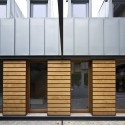


‘Dimensionless’ Photographic Façade Studies By Nikola Olic
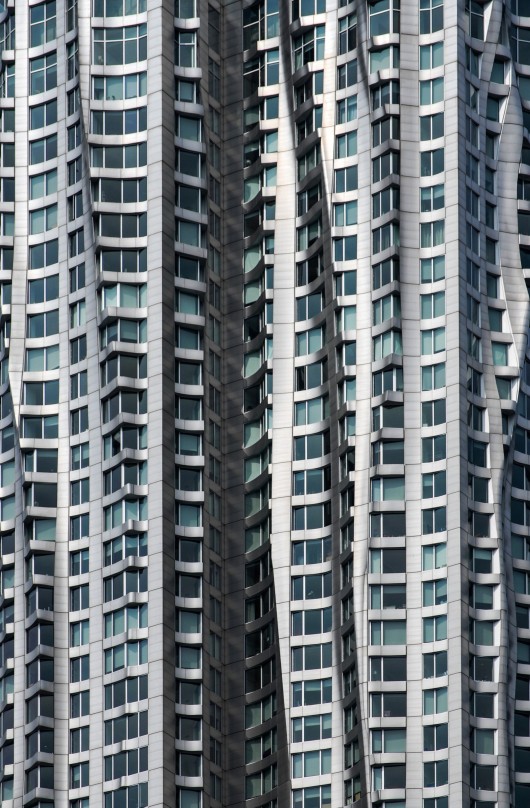
Nikola Olic is an architectural photographer based in Dallas, Texas, with a focus on capturing and reimagining buildings and sculptural objects in “dimensionless and disorienting ways.” His photographs, which often isolate views of building façades, frame architectural surfaces in order for them to appear to collapse into two dimensions. According to Olic, “this transience can be suspended by a camera shutter for a fraction of a second.” As part of his process, each photograph is named before being given a short textual accompaniment.
See a selection of Olic’s photographs after the break.




Lublin Science And Technology Park / Stelmach I Partnerzy Biuro Architektoniczne
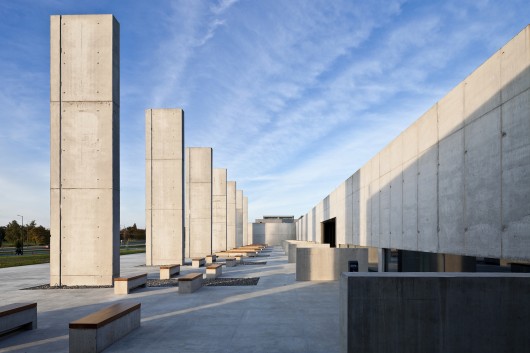
Architects: Stelmach I Partnerzy Biuro Architektoniczne
Location: 20-262 Lublin, Poland
Architect In Charge: Boleslaw Stelmach
Area: 10500.0 sqm
Year: 2013
Photographs: Marcin Czechowicz
Location: 20-262 Lublin, Poland
Architect In Charge: Boleslaw Stelmach
Area: 10500.0 sqm
Year: 2013
Photographs: Marcin Czechowicz





No comments:
Post a Comment
Please leave a comment-- or suggestions, particularly of topics and places you'd like to see covered