
the world's most visited architecture website
A Rare Look Inside OMA’s CCTV Building in Beijing
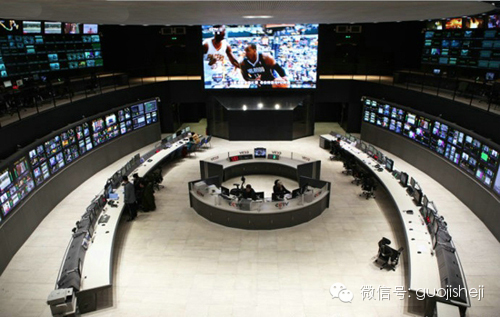
Since the building’s construction concluded in 2012, images of OMA’s CCTV Headquarters have permeated the media. But inside views of this mutant skyscraper — characterized by a soaring 72 meter cantilever — have remained rare. Until now, that is. Images originally published by International Design and shared on WeChat by 广电独家 reveal the interior of OMA’s CCTV Headquarters, including Emmy-winning set designer Jim Fenhagen’s news studios.
Take a peek inside the meeting rooms, hallways and control centers of CTBUH’s 2013 Best Tall Building Worldwide.

NITA’s “Antalya Tower” to be Built in Turkey
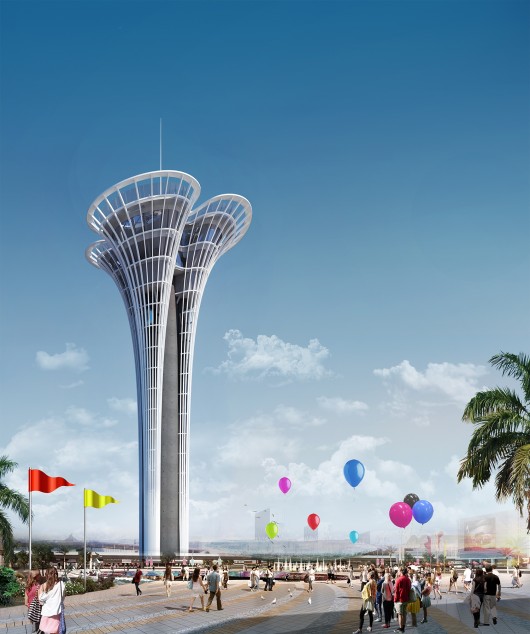
Construction is due to commence later this year on “Antalya Tower,” the winning entry of “The Expo 2016 Antalya Tower” competition. Situated on Antalya on Turkey’s southwest coast, the tower was designed by local firm NITA, and will cater for the city’s 10 million annual visitors. The completion of the tower will coincide with the “World Botanic Expo 2016,” to be held in Antalya and marking Turkey’s first international Expo.


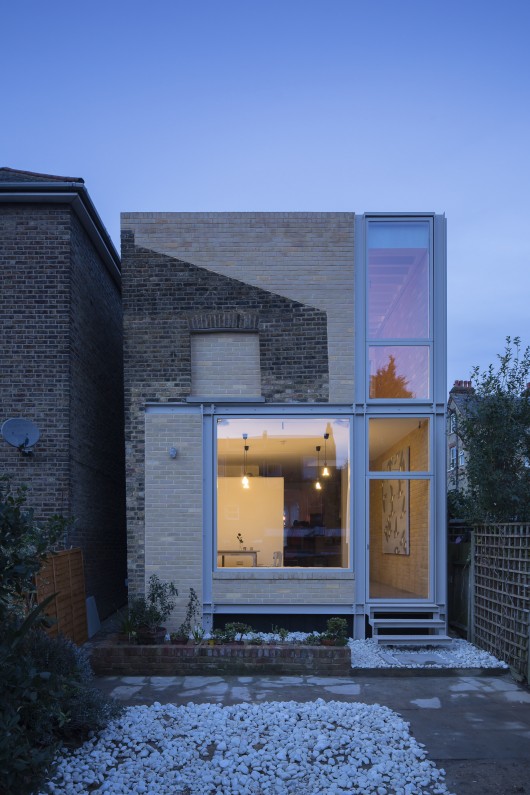
House of Trace / TSURUTA Architects

In Conversation With Will Hunter, Director Of The New London School Of Architecture

The great schools of architecture have been around since time immemorial, or at least that’s how it can often feel. In London, a city particularly dense with institutions of this calibre, this is perhaps felt more acutely. How, then, do you develop an entirely new school in this tightly packed environment which has the potency and capacity to compete? Will Hunter, former executive editor of the London-based Architectural Review, began a process to do just this with an article in 2012. Following this, he set up the ARFA—Alternative Routes For Architecture—in order to explore different models for architectural education, calling upon professionals and academics to contribute to a series of informal discussions.
“When the tuition fees in the UK escalated to around £9000 per year in 2013, it got me thinking about different models for architectural education,” Hunter recalls. The casual meetings held around this time gradually become more serious until, “at a certain point, we decided to test them: to make a school.” The project gathered momentum from that point on and now, two years later, the London School of Architecture (LSA) are preparing to take in their first ‘trailblazing cohort’ of postgraduate students.
Santo António Museum / Site Specific Arquitectura + P-06 ATELIER
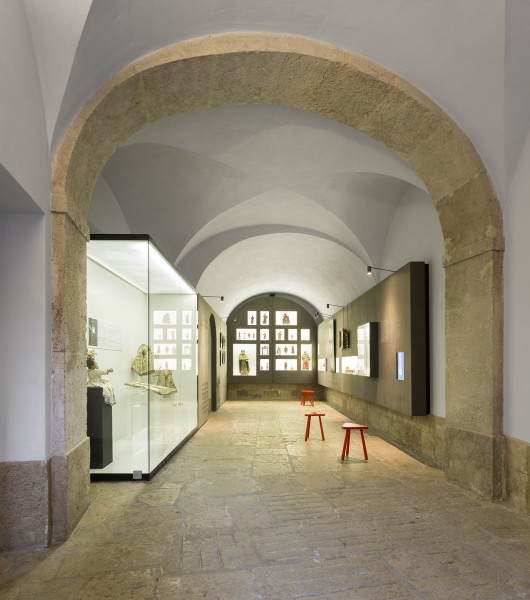
Architects: Site Specific Arquitectura, P-06 ATELIER
Location: Museu Municipal de Loures, EN 8 km 4,3 – Quinta do Conventinho, 2660-346 Santo António dos Cavaleiros, Portugal
Architect In Charge: Patrícia Marques, J.Paulo Costa
Designers : Nuno Gusmão, Pedro Anjos
Team : Joana Prosépio, A.AL arquitectos
Area: 295.0 sqm
Year: 2014
Photographs: Fernando Guerra | FG+SG
Location: Museu Municipal de Loures, EN 8 km 4,3 – Quinta do Conventinho, 2660-346 Santo António dos Cavaleiros, Portugal
Architect In Charge: Patrícia Marques, J.Paulo Costa
Designers : Nuno Gusmão, Pedro Anjos
Team : Joana Prosépio, A.AL arquitectos
Area: 295.0 sqm
Year: 2014
Photographs: Fernando Guerra | FG+SG

Vocational School Embelgasse / AllesWirdGut
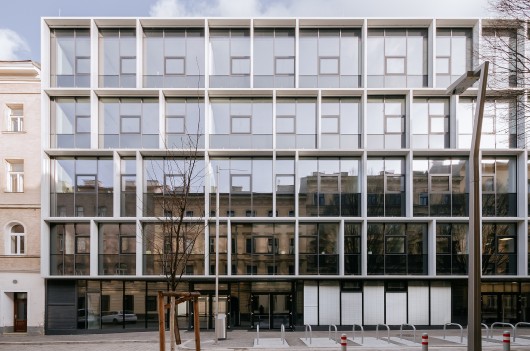
Architects: AllesWirdGut
Location: Embelgasse, Austria
Architects In Charge: Martin Brandt, Johannes Windbichler
Collaborators: Alexander Mayer, Christian Zotz, Johann Wittenberger, Isabel Espinoza Tratter, Ondrej Stehlik, Atsushi Kanekoer
Area: 5820.0 sqm
Year: 2015
Photographs: Courtesy of AllesWirdGut
Location: Embelgasse, Austria
Architects In Charge: Martin Brandt, Johannes Windbichler
Collaborators: Alexander Mayer, Christian Zotz, Johann Wittenberger, Isabel Espinoza Tratter, Ondrej Stehlik, Atsushi Kanekoer
Area: 5820.0 sqm
Year: 2015
Photographs: Courtesy of AllesWirdGut

Svarga Residence / RT+Q Architects
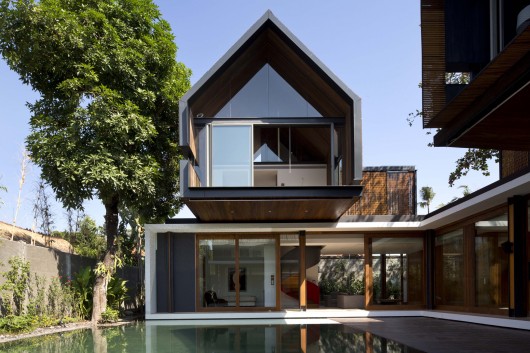
Architects: RT+Q Architects
Location: Jalan Taman Batu Jimbar 1, Cibodas, Kota Tangerang, Banten 15138, Indonesia
Area: 784.0 sqm
Photographs: Albert Lim K.S.
Location: Jalan Taman Batu Jimbar 1, Cibodas, Kota Tangerang, Banten 15138, Indonesia
Area: 784.0 sqm
Photographs: Albert Lim K.S.

Blue Bottle Coffee AOYAMA Cafe / Schemata Architects
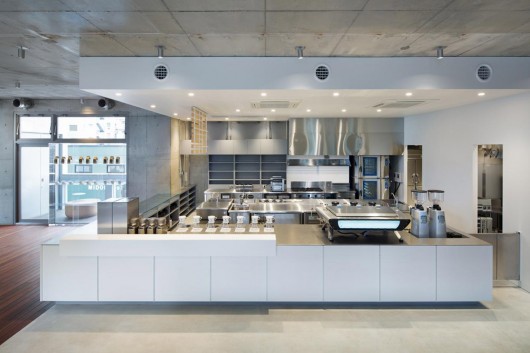
Architects: Schemata Architects
Location: Minamiaoyama, Minato, Tokyo 107-0062, Japan
Architect In Charge: Jo Nagasaka
Design Team: Ryosuke Yamamoto
Area: 189.0 sqm
Year: 2015
Photographs: Takumi Ota
Location: Minamiaoyama, Minato, Tokyo 107-0062, Japan
Architect In Charge: Jo Nagasaka
Design Team: Ryosuke Yamamoto
Area: 189.0 sqm
Year: 2015
Photographs: Takumi Ota
The Minton / DP Architects
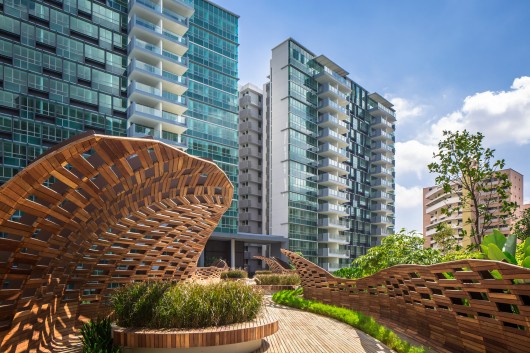
Architects: DP Architects
Location: 146 Hougang Street 11, Singapore 530146
Design Team: Tong Bin Sin, Mike Lim, Wang Tse Lip, Toh Li Chuin, Divino Carrillo, Firman Saleh, Jacob Sandoval, Joseph Chua, Mochamad Herman Irfany, Pek Hui Xian, Roslinah Ahmad, Ross Vinco, Rowell Mendoza, See Phei Kee, Tan Teng Siew
Area: 123900.0 sqm
Year: 2014
Photographs: Courtesy of DP Architects
Location: 146 Hougang Street 11, Singapore 530146
Design Team: Tong Bin Sin, Mike Lim, Wang Tse Lip, Toh Li Chuin, Divino Carrillo, Firman Saleh, Jacob Sandoval, Joseph Chua, Mochamad Herman Irfany, Pek Hui Xian, Roslinah Ahmad, Ross Vinco, Rowell Mendoza, See Phei Kee, Tan Teng Siew
Area: 123900.0 sqm
Year: 2014
Photographs: Courtesy of DP Architects
KPMB and West 8 Selected to Redesign Toronto Ferry Terminal
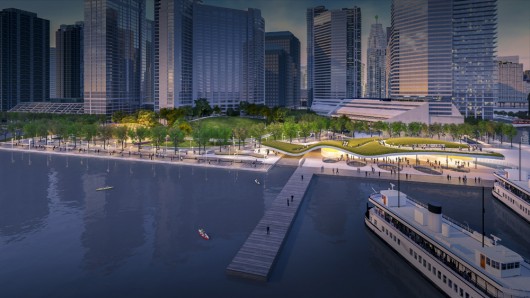
KPMB Architects, West 8 and Greenberg Consultants have been announced as winners of a competition to revitalize Toronto’s Jack Layton Ferry Terminal and Harbor Square Park. The winning proposal, “Harbour Landing” envisions a terminal embedded within the surrounding park and topped with a lush public green space that expands the waterfront park.
“The vision for the area will result in a welcoming gateway to the Toronto Islands – one of the City’s most unique and cherished parks – with amenities and infrastructure to support the approximately 1.3 million visitors who use the ferry each year,” said competition organizers, Waterfront Torontoand the City of Toronto in a press release.
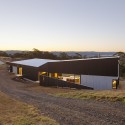
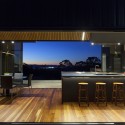
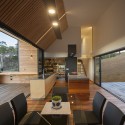
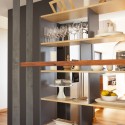
Valley House / Philip M Dingemanse
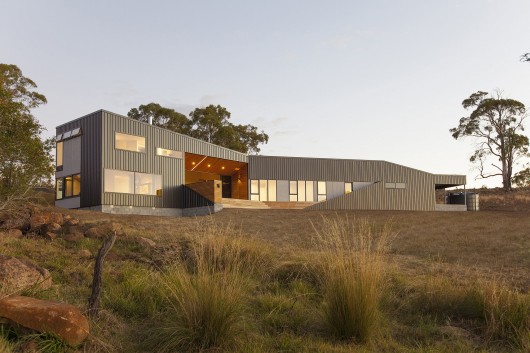
Architects: Philip M Dingemanse
Location: Launceston TAS, Australia
Area: 267.0 sqm
Year: 2014
Photographs: Luke Hesketh
Location: Launceston TAS, Australia
Area: 267.0 sqm
Year: 2014
Photographs: Luke Hesketh
International Spy Museum Aims to Relocate to New Richard Rogers Building
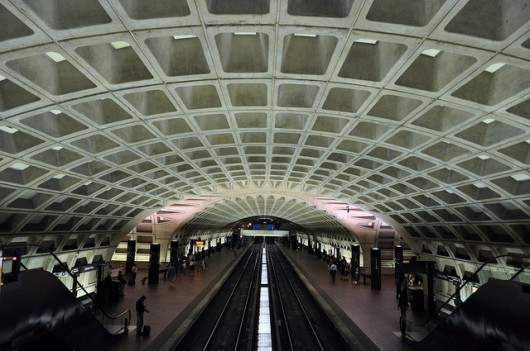
The Washington DC International Spy Museum is seeking permission to relocate to a new $100 million building designed by Richard Rogers at L’Enfant Plaza. Contingent on approval from the Commission of Fine Arts, as the Washington Business Journal reports, the new 100,000-square-foot, six-story proposed museum would be sited on an open area adjacent to the L’Enfant Plaza hotel.
“I think everyone in the city knows that’s somewhat of a dead area right now,” said Spy Museum Chief Operating Officer Tamara Christian to WBJ. “When we came to Penn Quarter, it was somewhat of a dead area. Now it’s completely energized, and we’re really hoping that we’ll be able to be a catalyst to energize L’Enfant.”
Notre Ntam’ Lesvos Residences / Z-level

Zaha Hadid’s 3D Printed Flame Heels Among 5 Designs to Re-Invent the Shoe

Zaha Hadid, Fernando Romero, and Ben Van Berkel are making headlines alongside two renowned artists for their 3D printed reinventions of the high heel. A collaborative vision spearheaded by United Nude and 3D Systems, the highly anticipated project was unveiled yesterday at the “Re-Inventing Shoes” exhibition at Milan Design Week.
Each sculptural heel was 3D printed using SelectiveLaser Sintering in a hard Nylon and all-new soft Rubber material, making a “fully functioning” shoe. Only up to 50 pairs of each will be sold. See them all, after the break.
TID Annex / ATELIER ARS°
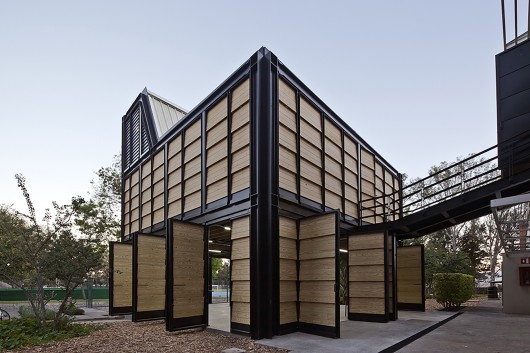
Architects: ATELIER ARS°
Location: Manuel Gómez Morin 8585, Santa María Tequepexpan, 45601 San Pedro Tlaquepaque, Jal., Mexico
Architects In Charge : Alejandro Guerrero, Andrea Soto.
Area: 200.0 sqm
Year: 2015
Photographs: Onnis Luque
Location: Manuel Gómez Morin 8585, Santa María Tequepexpan, 45601 San Pedro Tlaquepaque, Jal., Mexico
Architects In Charge : Alejandro Guerrero, Andrea Soto.
Area: 200.0 sqm
Year: 2015
Photographs: Onnis Luque
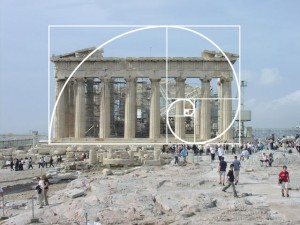
Is the Golden Ratio Design’s Greatest Hoax?
For more than 150 years, the Golden Ratio has been one of the main tenets of design, informing generations of architects, designers, and artists. From Le Corbusier to Apple, Vitruvius to Da Vinci, the ratio purportedly dictates which forms will be found aesthetically pleasing. Yet mathematicians and designers have grown skeptical of the practical applications of the Golden Ratio, with Edmund Harriss of the University of Arkansas’ mathematics department putting it at its most simple: “It is certainly not the universal formula behind aesthetic beauty.” Writing for Fast Co. Design, John Brownlee collates sources as diverse as the mathematics department at Stanford University to Richard Meier, laying out the case against what may just be design’s greatest hoax. Read the full article here.
AMB House / Bernardes + Jacobsen Arquitetura

Architects: Bernardes, Jacobsen Arquitetura
Location: Guarujá – SP, Brazil
Architect In Charge: Paulo Jacobsen
Design Team: Fabiana Porto (coordinator), Edgar Murata, Henrique Carvalho, Marina Nogaró.
Area: 810.0 sqm
Year: 2011
Photographs: Leonardo Finotti
Location: Guarujá – SP, Brazil
Architect In Charge: Paulo Jacobsen
Design Team: Fabiana Porto (coordinator), Edgar Murata, Henrique Carvalho, Marina Nogaró.
Area: 810.0 sqm
Year: 2011
Photographs: Leonardo Finotti


AD Materials Round Up: Wire Mesh

Though it can sometimes be overlooked in favor of materials which are more decisively either transparent or opaque, wire mesh is a tremendously versatile material that can be used for anything from delicate screens to a rough industrial interior. Here, ArchDaily Materials presents five projects that use wire mesh to great effect: Camenzind Evolution’s “Coccoon” building which shrouds the entire facade in a silvery screen; the Ibiray House by Oreggioni Prieto, which uses a loose mesh to grow plants for seasonal shading; Melaten Car Park by KSG Architekten, which uses a mesh facade to create an “out of focus” effect; Nickl & Partner Architekten’s Renovation and Extension of the Hameln County Hospital, which uses motorized mesh screens to shade patient rooms; and finally the Croatian Pavilion for the 2010 Venice Biennale, with an interior space dramatically carved from a block of 32 tons of welded wire mesh.



No comments:
Post a Comment
Please leave a comment-- or suggestions, particularly of topics and places you'd like to see covered