

First responders listen as the Mandarin instructor speaks. Yijun He / NBC News
An old man was lying motionless under the covers of his bed next to his wife when Jasmin Howard, a New York City Fire Department paramedic, entered the room. Howard and her partner had just walked up several flights of tight, confined stairs to get to the man in his cramped apartment in Manhattan's Chinatown.
His wife was hysterical and speaking in Chinese, but neither Howard nor her partner understood what she was saying. A family member on a phone that was handed to the paramedics struggled to translate. With the heat turned on, the man's body was warm, so his wife was convinced that he had just died.
But Howard and her partner could tell that he had been gone for much longer. Unable to communicate with her, Howard told NBC News they still tried to bring him back to life — checking vital signs, clearing his airway, and performing CPR for over half an hour.
"She needed to see we were going to do everything in our ability to try to resuscitate him," Howard, 38, said about the incident, which happened several years ago. "It was in her best interest."
Every day, language barriers pose a myriad challenges for first responders, especially in cities like New York where some 200 languages are spoken among nearly 8.5 million residents. Sometimes, they make getting critical details about a patient's medical history more difficult. Other times, they prevent firefighters from learning quickly whether anyone is still inside a burning building when they pull up to a fire.
In an effort to bridge the language gap between the FDNY and the city's rapidly expanding Chinese communities, the Phoenix Society — an organization of Asian-American firefighters, emergency medical personnel, and civilian employees — launched a beginner-level Mandarin class in the fall to teach FDNY members, many of whom work on the front lines, the rudiments of a language spoken by nearly 420,000 New Yorkers.
"We believe this program will not only improve the vital emergency medical care and fire prevention services we provide to the Asian-American communities in New York City, it will also help foster a more inclusive department for all of our members," FDNY Fire Commissioner Daniel A. Nigro told NBC News.
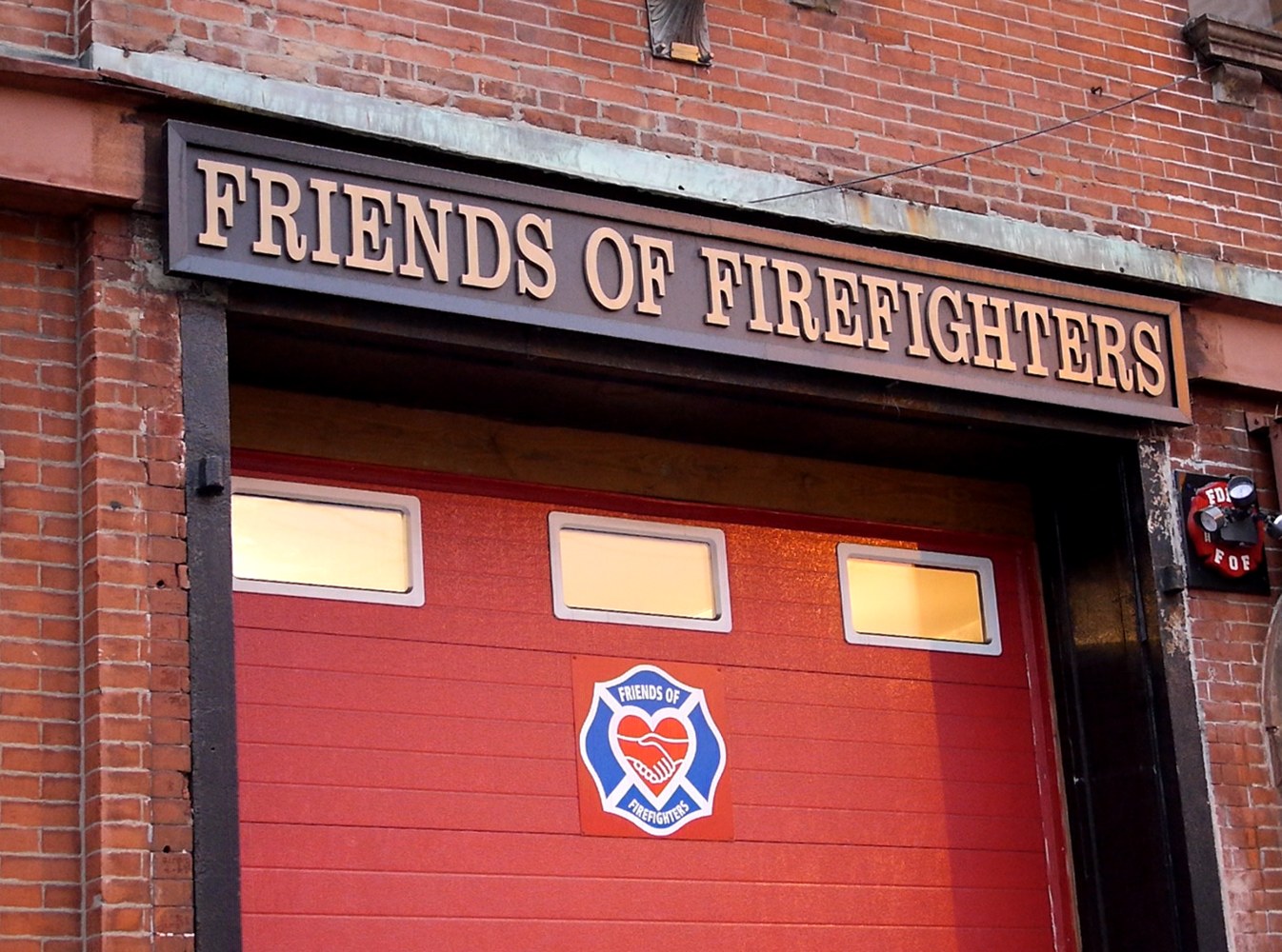
Those were the goals Lt. Steven Lee, president of the Phoenix Society, had in mind when he first proposed the Chinese-language course last summer. With the help of Friends of Firefighters, a nonprofit that assists New York City firefighters and their families, Lee drew up a grant proposal for two 16-week courses that would meet weekly for two hours each session. The FDNY Foundation, the department's official nonprofit organization, agreed to fund the program, and Friends of Firefighters executive director Nancy Carbone offered to hold the classes in her organization's space, a former firehouse on Van Brunt Street in Red Hook, Brooklyn.
Mandarin was a logical choice for the course, Lee told NBC News, with New York home to more Chinese than any other city outside of Asia. From 2000 to 2011, the city's foreign-born Chinese population grew by 34 percent, rising from 261,551 to 350,231, according to a 2013 report by the Department of City Planning. Assuming those growth rates hold, Chinese residents are poised to replace Dominicans in the next few years as the city's largest immigrant group, the report predicts.
"While we continue to diversify our first responders, so that we have people who can come in with a secondary language and be able to communicate in these immigrant neighborhoods, we want to be able to offer our current workforce language instruction, so that we can go out there and do the job that we're tasked with right now in real time," Lee said.
The current class ends in March, and the second beginner-level course will start soon after. Lee said that he hopes that the Phoenix Society can someday offer instruction in other Asian languages, as well as in Cantonese, another common Chinese dialect spoken in New York City.
While a lack of proficiency in a language other than English doesn't prevent first responders from helping people in emergencies, there can be roadblocks that my delay help.
Typically, when a non-English speaker calls 911, the police operator usually loops in an interpreter who translates what the caller is saying into English. That dialogue becomes part of the call-taker's history, to which emergency medical workers typically have access.
In certain circumstances, first responders can also use a language line for interpretation once on the scene. And if they're lucky, there might even be a friend or relative of the person in need of emergency assistance who can help interpret.
But technical problems may make the language line unavailable, or, as Howard experienced, the English of a friend or family member may not be so fluent. Quickly getting answers to vital questions — for instance, whether blood is present in a patient's vomit or stool — can thus aid in making better informed medical decisions when seconds count.
"Being able to ask those types of questions can help to make a difference," Howard said.

The Phoenix Society's Mandarin-language course is a first step in meeting that objective, Lee said. During one class in November, attended by NBC News, instructor Lily Cheung led her dozen-or-so students in asking each other questions such as whether they like certain foods or beverages. The emphasis at first is not so much on learning job-specific vocabulary as it is on mastering the Chinese-language sentence structure, which can be different from English, she said.
"People can use what they learn in Chinatown and speak with the people there," said Cheung, a senior IT analyst who volunteers for the Asian Language Exchange and Social Network, an organization that offers free instruction in Chinese and other Asian languages. "I want it to be practical."
As the class progresses, students will pick up terms and phrases they can use on calls—some of which could have come in handy back in September for Battalion Chief George Ebert, who has been with the FDNY for 24 years and supervises fire companies in Coney Island, Brooklyn.
Right after he began the class, Ebert was summoned by one of his units on routine building inspection after firefighters had come across a Chinese boy, maybe 5 or 6 years old, who was lost.
Ebert told NBC News that he and his crew tried to find out whether the boy had parents, guardians or siblings nearby, but their efforts were hampered by the child's not being able to speak or understand English. "We ended up finding the family down the street a little ways," Ebert said. "Just trying to communicate with the family, we had to end up talking to one of the teenage daughters who knew English and Mandarin."
Looking back, Ebert said mixing in some body language with asking questions in Mandarin such as, "Where is your father?" or "Where do you live?" could have helped get the boy home sooner.
Aside from fires and emergencies, day-to-day dealings with the public also present opportunities to use Mandarin to strengthen the relationship between the fire department and the people they serve, the students say.
As an example, Lee brought up a recent fire in Brooklyn that he and a fellow classmate, Firefighter Michael Zaczyk, were called to. After the fire was extinguished and the firefighters emerged from the building, Lee noticed a crowd of Chinese-American onlookers gathered in the street. Lee and Zaczyk approached them, and Zaczyk tried out some of his Chinese, Lee said.
"You can see that he's into practicing, he's speaking with them, and he's showing some sort of enthusiasm and pride that he's learning this language," Lee said of Zaczyk.
Even though Zaczyk was far from fluent, the crowd was impressed, Lee said.
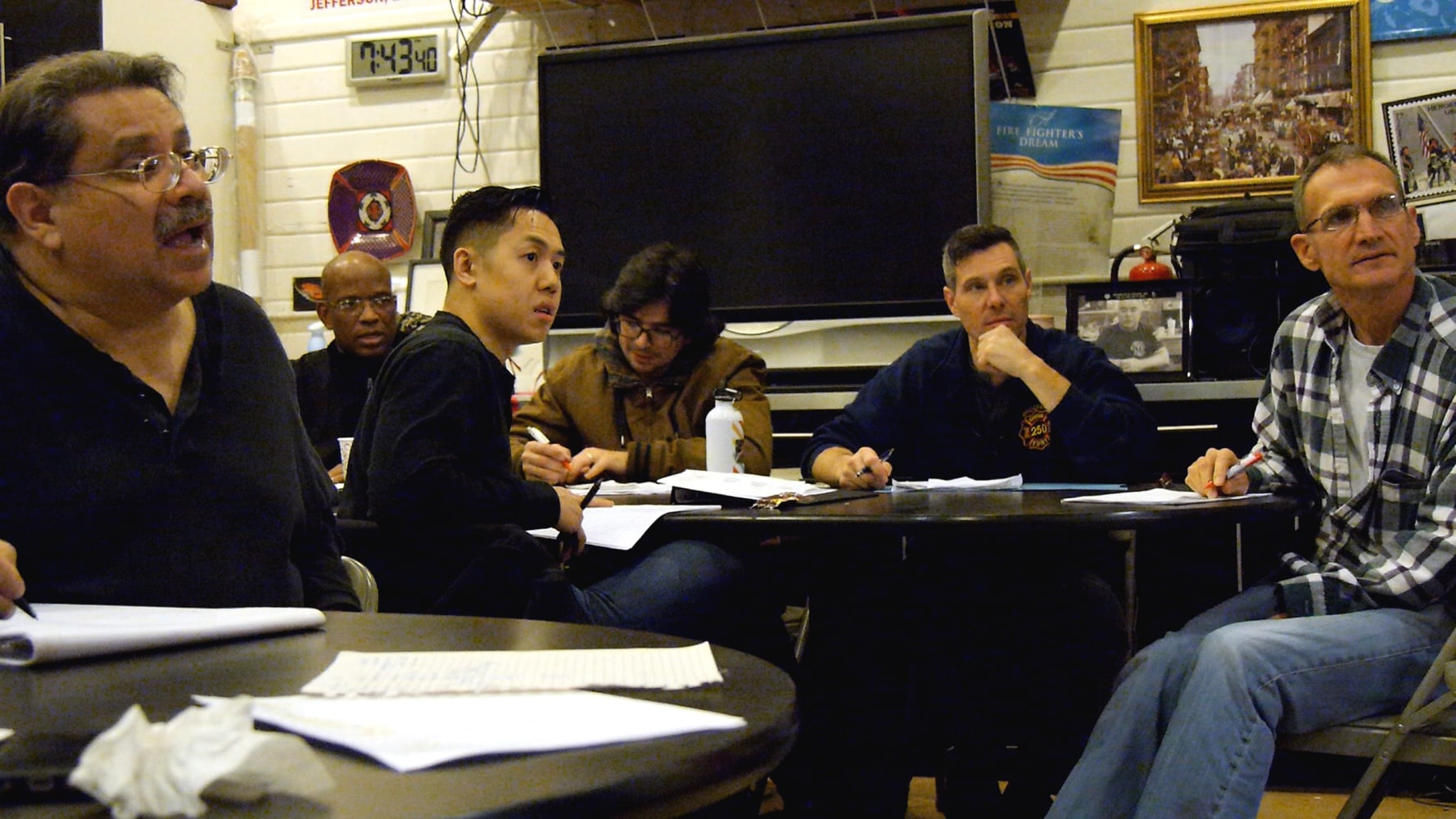
And then there's the camaraderie. The class, students say, has brought together members of the 150-year-old department that ordinarily might never cross paths: firefighters, emergency medical workers, and civilian employees who don't regularly work together, along with veterans with over 40 years in the department and relative newcomers. The class is made up of both men and women, and diverse students who identify as Asians, Latinos, blacks, and whites.
"Opportunities like this and the new movement toward diversity and just being more humane in house — not just how we serve the public, but how we treat each other — is huge," Howard, the FDNY paramedic, said.
Diversity has been slow to penetrate the roots of the FDNY. It remains one of 39 city agencies with the greatest proportion of white employees, according to the 2013 NYC Government Workforce Profile, a federally-mandated report the city issues every two years.
But in recent years, that has slowly begun to change. Following the settlement of a lawsuit in 2014 brought by the U.S. Department of Justice and the Vulcan Society of black firefighters, which challenged the city's use of two firefighter civil service exams found to have discriminated against black and Hispanic candidates, the city agreed to recruiting reforms to make the FDNY better resemble the city's demographic makeup, according to the mayor's office.
Between 2013 and 2015, the number of black firefighters increased by 39 percent, Asians by 33 percent, and Hispanics by 26 percent, according to the FDNY. Stationed across the city's five boroughs, there are 10,637 firefighters and officers in all, of which 5.5 percent are black, 1.2 percent Asian and 9.6 percent Hispanic.
In New York City, 25.5 percent of residents are black, 12.7 percent are Asian and 28.6 percent are Hispanic or Latino, according to the U.S. Census.
"As we continue to diversify, we also have to find ways to become more inclusive," Lee said. "We're going to have people of different racial or religious backgrounds entering the firehouses. So the more we can expose them to cultures other than their own, the more we can create an inclusive environment and ensure that fluidity that we've enjoyed for such a long amount of time that helps us to be proficient out in the field."

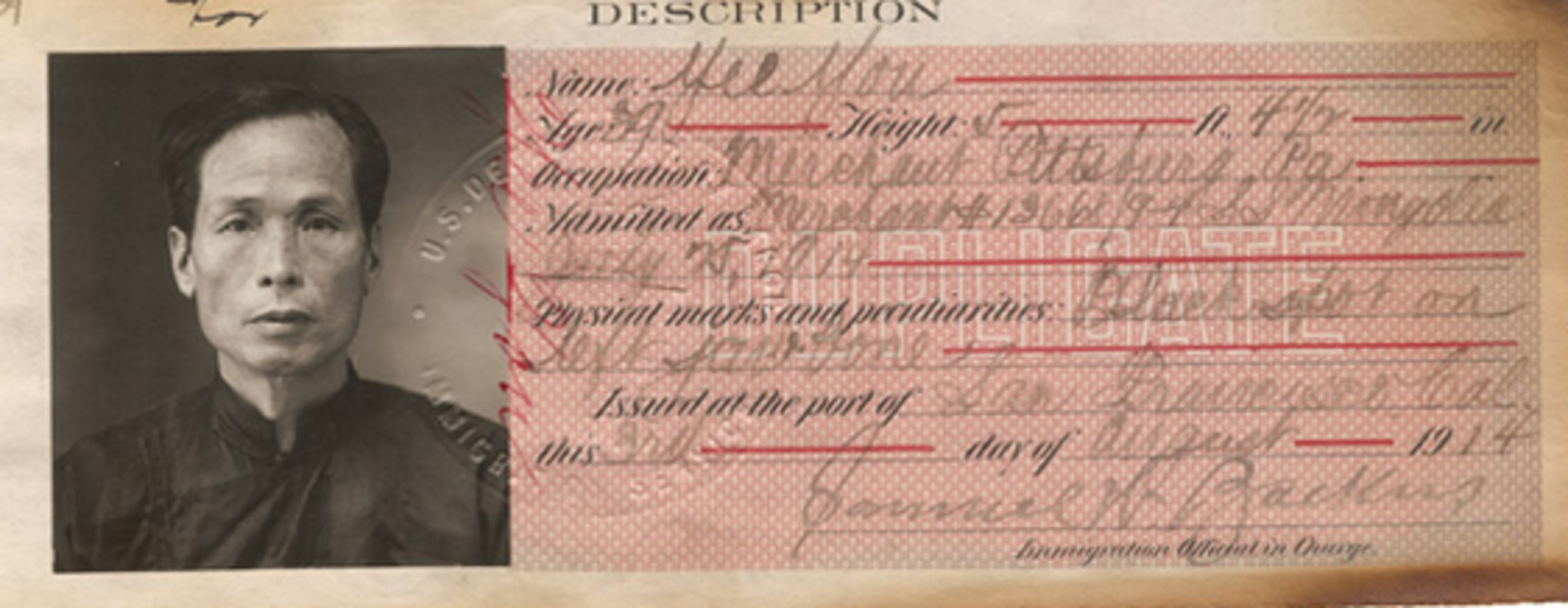
When the exclusion law was in effect, Chinese immigrants were often subjected to detention and questioning at San Francisco's Angel Island. Interview, 1923. National Archives at College Park, MD; New York Historical Museum
In Congress, U.S. Senators called them "vermin" and said the "oriental civilization" was a threat to the nation and their way of life. Anti-Chinese sentiment had been growing, and the violence that resulted would include incidents like the one that claimed 17 Chinese lives in Los Angeles — one of the largest mass lynchings in U.S. history.
So when Horace F. Page of California gave in to the hysteria and introduced into the House the bill that would ultimately ban Chinese immigrant labor in 1882, it took less than one month to pass into law. In 1902, the act—which was meant to be temporary—became permanent.
It would take took more than 60 years to undo the damage. The Chinese Exclusion Act was repealed 72 years ago, on Dec. 17, 1943, with the signing of the Magnuson Act.
The act is part of the historical legacy that has been repeated with the largest groups that make up Asian America, from the Chinese to the Filipinos to the Japanese, according to Erika Lee, University of Minnesota history professor and "The Making of Asian America: A History."
And that history is continuing to repeat itself. In an interview with NBC News, Lee said the proposal by Republican presidential candidate Donald Trump to ban non-American Muslims from entering the U.S. makes understanding the fear politics in Asian-American history more important than ever.
RELATED (2014): The Chinese Exclusion Act Ended Seventy-One Years Ago, Today
"The Exclusion Act singled out one group for exclusion based on their race and their class. The Trump proposal would similarly single out a group based on their religion," Lee said. "Congress passed a 'statement of regret' for the Chinese Exclusion Act in 2012. But it would seem that Congress is willing to consider similar proposals for Muslims today."
The factors that created the fear politics of the 19th century, Lee added, are similar to what the country is seeing today. "The 1880s was a time when American anxieties over the economy — boom and bust era of industrialization, transition to new kinds of labor and labor systems; race — Jim Crow era segregation, Indian Wars, massive new immigration from S and E Europe and from China; and our place in the world — full expansion Westward, beginning to become more involved in the Pacific region — led to increased scrutiny of immigration as something harmful to the U.S.," Lee said.
She added, "One could easily argue that these same anxieties are shaping the immigration debate today: economic — post-recession jitters, growing economic inequality, deindustrialization and new kinds of labor systems; race — regression of civil rights movement, growing incarceration rates of African American and Latino men, police brutality; [our] place in the world — unending conflict in the Middle East, questions about whether U.S. is still sold superpower in the world."

Lee points out the Chinese weren't the only ones to experience the pattern of fear in American history. After the successful exclusion of the Chinese, the country's attention turned to the Japanese. More than 380,000 came from Japan to the United States between 1885 and 1924. But Lee writes in her book that Japanese immigrants "lost their struggle for equality in the United States, because no matter how hard they tried to demonstrate how American they were, they were still seen as Japanese."
Well before President Franklin Roosevelt's signing of Executive Order 9066 that incarcerated more than 120,000 Japanese Americans in World War II, the anti-Japanese sentiment in the U.S. was fueled as early as the 1920s by the global image of Japan and fears of its potential dominance.
In her book, Lee describes how the term "yellow peril" actually began in Germany with German Kaiser Wilhelm II who dreamt that Europe was threatened by invaders from the East. A painting commissioned by Wilhelm shows the European nations awaiting battle as an image of Buddha riding a Chinese dragon can be seen on the horizon.
The sentiment resonated in the U.S.
"Apprehension about Japan's expanding empire heightened existing fears that Japanese immigrants were growing in number, taking away jobs, and preparing for an eventual invasion of the Western Hemisphere," Lee writes in her book. "These 'yellow peril' anxieties became part of the larger transnational conversations about hemispheric security and the future of the 'white race' circulating in both North and South America."
And it didn't end with the Japanese in the U.S. When the Filipinos arrived to the U.S. in large numbers in the 1920s and 1930s, despite being American nationals, their presence led to another wave of anti-Asian violence led by white separatist groups in California.
"Filipinos were considered another 'Asiatic invasion,' just like the Japanese 'yellow peril,' and the fear of the unassimilable and undesirable South Asians," Lee told NBC News. "Americans feared that without exclusion, there would be too many Filipinos who, like other Asians, would compete for jobs, and bring more racial problems."
As a check against Filipino procreation with white women, anti-miscegenation laws were passed in California and at least eight other states, assuring that the mostly male population of Filipino laborers would not grow out of control.
Ultimately, in 1934, Congress would pass the Tydings-McDuffie Act that would strip Filipinos of their status as American nationals and reclassify them as aliens. The law encouraged repatriation and created an immigration quota that would remain in place until the mid-1960s.
"History shows us that fear-driven policies are bad for our country and for our people," Lee said. "President Roosevelt apologized for the Chinese Exclusion Act, saying that it was a 'historic mistake.' Presidents Ford, Carter, and Reagan all expressed regret and then with Reagan, an official apology for [Executive Order 9066]."
As for current day politics, Lee believes the community has a shared responsibility in how its perceived.
"Asian Americans, and immigrants in general, have always maintained complex ties to their homelands," Lee said. "That does not mean that they cannot be, or are not Americans at the same time. As we become increasingly global and live our lives across national borders, we must find ways to understand how being 'American' can mean feeling at home in two or more places at the same time."
In response to today's politicians, Lee, who also serve as the director of the Immigration History Research Center at the University of Minnesota, says that a lesson in Asian-American history could help leaders currently mired in the politics of fear.
"The experience of Asian Americans shows us how unjust singling out certain groups for exclusion can be for the U.S. as a whole and for generations of immigrants and their American-born children," Lee said.


No comments:
Post a Comment
Please leave a comment-- or suggestions, particularly of topics and places you'd like to see covered